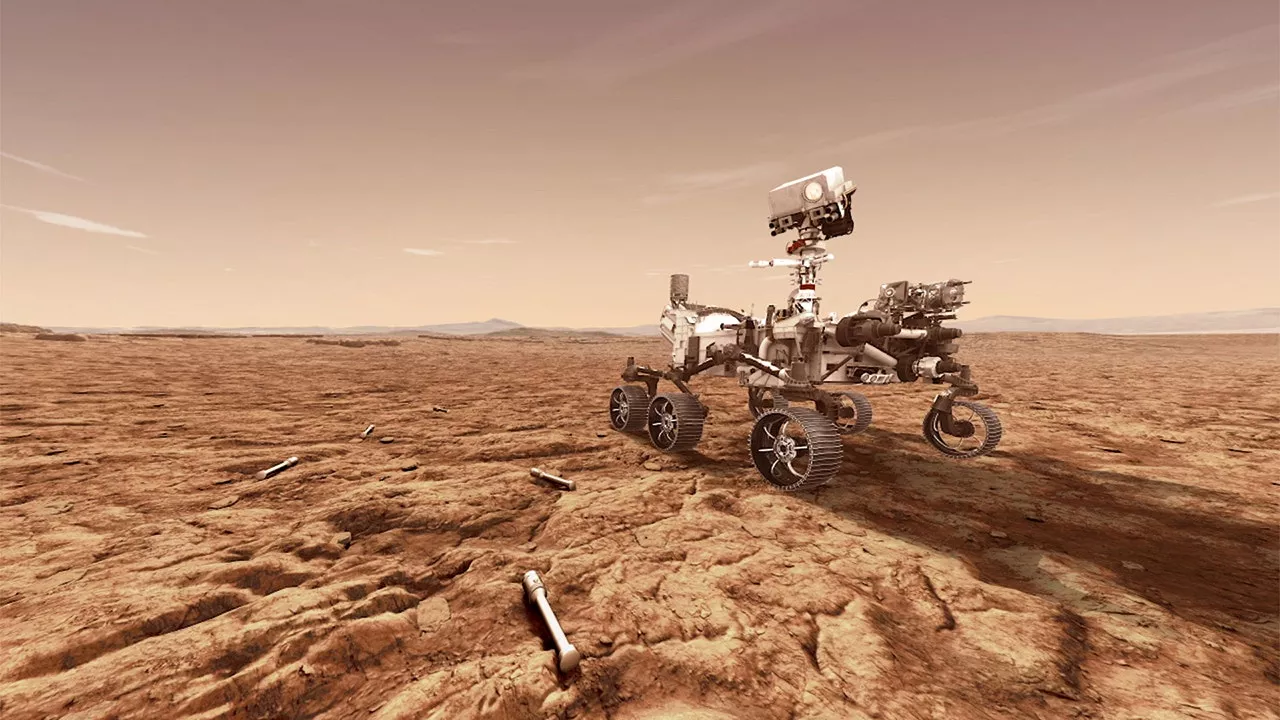
BREAKING: NASA’s Perseverance rover has made a groundbreaking discovery on Mars, identifying a potential meteorite named ‘Phippsaksla’. The shiny rock, rich in iron and nickel, may have originated from an ancient asteroid, marking a significant find in the quest to understand Mars’ geological history.
Just announced, this remarkable discovery adds Perseverance to the roster of Mars rovers that have encountered extraterrestrial materials. Located near the Jezero Crater, the rock stands out against the surrounding terrain, prompting scientists to investigate further. The analysis indicated high concentrations of iron and nickel, elements commonly found in meteorites, suggesting Phippsaksla could indeed be a cosmic visitor.
NASA’s latest blog post confirms that this is not the first metallic rock found on Mars, but it could be a milestone for Perseverance—none of its predecessors, including Curiosity, Opportunity, and Spirit, identified such a specimen during their missions. With this discovery, Perseverance could finally join the ranks of rovers that have documented the presence of meteorites on the Martian surface.
The rover utilized its advanced SuperCam instrument to analyze Phippsaksla. This laser-based tool vaporizes minute material samples to assess their chemical composition from meters away. The readings revealed the unusual iron and nickel combination, a hallmark of meteorites formed deep within asteroids. NASA emphasized that such a composition is rarely found in native Martian rocks, adding to the excitement surrounding this find.
If confirmed as a meteorite, Phippsaksla would join notable meteorites previously identified by other rovers, including Curiosity’s ‘Lebanon’ and ‘Cacao’ finds. Each of these discoveries enhances our understanding of how meteorites interact with the Martian environment over time.
Importantly, Phippsaksla’s location, poised atop ancient impact-formed bedrock, may provide insights into its origin and the processes that led to its presence on Mars. NASA is committed to further investigating the rock to validate its extraterrestrial origins.
This discovery comes after Perseverance’s journey of 293 million miles, which began with its launch on July 30, 2020, aboard a United Launch Alliance Atlas V rocket. The rover successfully landed in Jezero Crater on February 18, 2021, and has been exploring the Martian landscape for nearly four years, seeking signs of ancient microbial life.
The excitement surrounding Phippsaksla serves as a reminder of the unexpected wonders awaiting exploration on Mars, a planet located over 140 million miles from Earth. As NASA continues to study this potential meteorite, the agency hopes to reveal more about the Martian surface and its history of cosmic interactions.
Stay tuned for further updates on this developing story as NASA’s team works diligently to confirm the origins of Phippsaksla. This discovery could usher in a new chapter for Perseverance and deepen our understanding of not only Mars but the solar system as a whole.