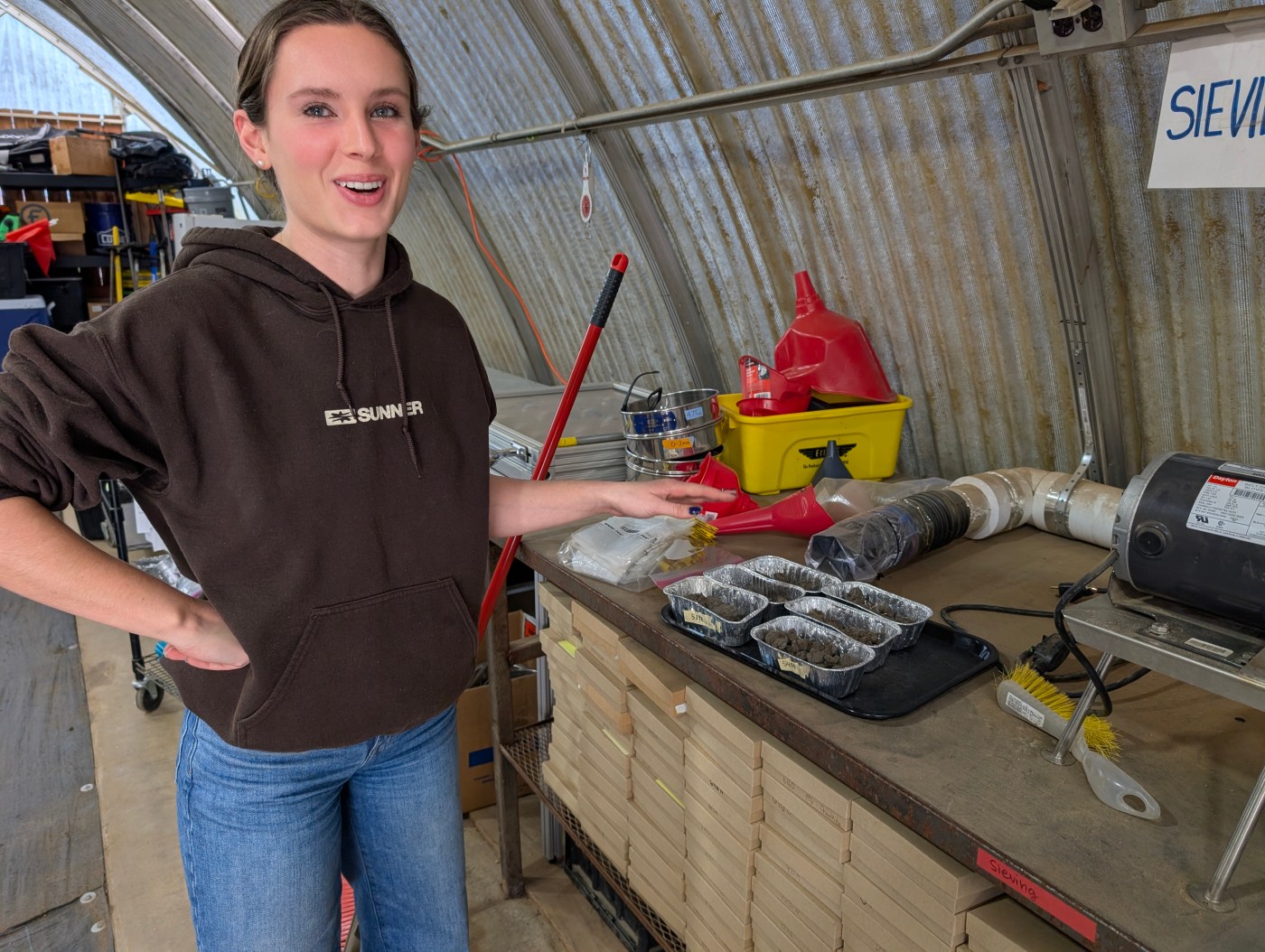
URGENT UPDATE: Students at Chico State University are making significant strides in soil health management, implementing regenerative practices that could reshape agriculture in California. As of February 4, 2026, students Kaylee Mulhearn and Paige Flaig are actively conducting soil tests aimed at enhancing natural growth conditions, marking a critical development for local farmers and the environment.
At the Chico State University Farm, the duo is engaged in vital soil analysis, working under the auspices of the Center for Regenerative Agriculture and Resilient Systems. Their mission? To collaborate with producers statewide and integrate sustainable management practices into farming systems. “This is the soil processing area,” Flaig explained. “We try to implement more regenerative practices and management styles into the system.”
On this pivotal day, the students are analyzing various soil samples for nutrient qualities. They are conducting side-by-side comparisons and field analyses to measure soil stability and its capacity to retain water, essential factors that contribute to robust agricultural ecosystems. “We collect cores of soil at different depths and assess its stability,” Flaig noted. “This helps us understand its ability to hold water and maintain biological health.”
In addition to soil stability measurements, Mulhearn highlighted the team’s extensive testing regimen, which includes carbon-nitrogen testing and pH level assessments in collaboration with a lab in Montana. “We aim to see the differences in soil health between regenerative practices and conventional practices,” Mulhearn said.
Both students emphasized the long-term goals of their work: to assist farmers in becoming more efficient by leveraging natural processes while simultaneously reducing reliance on synthetic inputs. “We try to work with nature instead of against it,” Flaig stated, underscoring the potential for these practices to lower costs and enhance sustainability.
This initiative not only has immediate benefits for local farming but also addresses broader environmental challenges. As the agricultural sector faces pressure from climate change and resource scarcity, the work being done by Mulhearn and Flaig could serve as a blueprint for sustainable farming practices nationwide.
As this story develops, the agricultural community and environmental advocates will be closely watching the results of these tests and the broader implications for farming practices across the state. The commitment to regenerative agriculture at Chico State is a testament to the potential of student-led initiatives to drive significant change in the industry.
Stay tuned for updates on how these findings may influence agricultural practices and contribute to a healthier ecosystem in California and beyond.