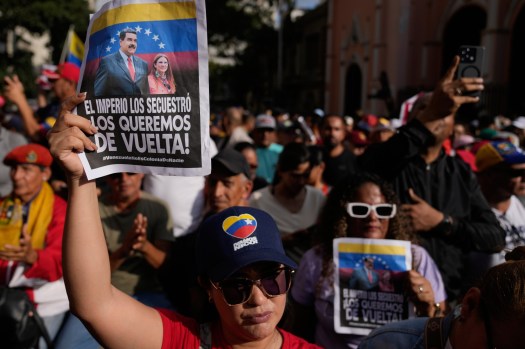
UPDATE: In a dramatic turn of events, U.S. forces launched a military operation early on January 3, 2024, targeting Venezuela and successfully removing Nicolas Maduro from power. This decisive action is framed as a crucial step to combat narco-trafficking and restore order in a country plagued by dictatorship and economic collapse.
While many Venezuelans are celebrating Maduro’s ousting, the broader implications of this intervention raise urgent questions. Can U.S. military involvement truly establish a sustainable political order, or will history repeat itself? Past interventions in Latin America, from Guatemala to Panama, have often left behind weakened institutions and increased instability, rather than the democracy promised by Washington.
The U.S. justification for the operation cites drug trafficking and criminal networks, yet critics argue this view oversimplifies the complex geopolitical interests at play. Venezuela is rich in oil reserves and has long resisted U.S. influence. By framing the invasion merely as a law enforcement action, officials risk overlooking the significant political and economic ramifications.
Former President Donald Trump hinted at potential future actions against other nations, including Cuba, Mexico, and Colombia, if deemed insufficiently cooperative. This alarming rhetoric signals a potential escalation in U.S. military involvement in the region, raising concerns about stability across the Western Hemisphere.
The humanitarian crisis in Venezuela is dire, with millions having fled the country. However, military intervention is not a panacea. History teaches us that removing a dictator does not automatically lead to the establishment of democracy. Instead, successful transitions typically involve internal coalitions and regional diplomacy rather than military might.
Political analysts warn that the current U.S. strategy might lead to further conflict rather than resolution. The situation remains fluid, and as Venezuelans grapple with the aftermath of this intervention, the world watches closely. Will they be allowed to build their own institutions, or will foreign control prevail?
As of now, the future of Venezuela hangs in the balance—decided not by who removed Maduro, but by the capacity of its people to forge a new political landscape. The lessons of past military interventions are clear: occupation disguised as liberation often leads to prolonged instability.
Stay tuned for further updates as this situation develops.