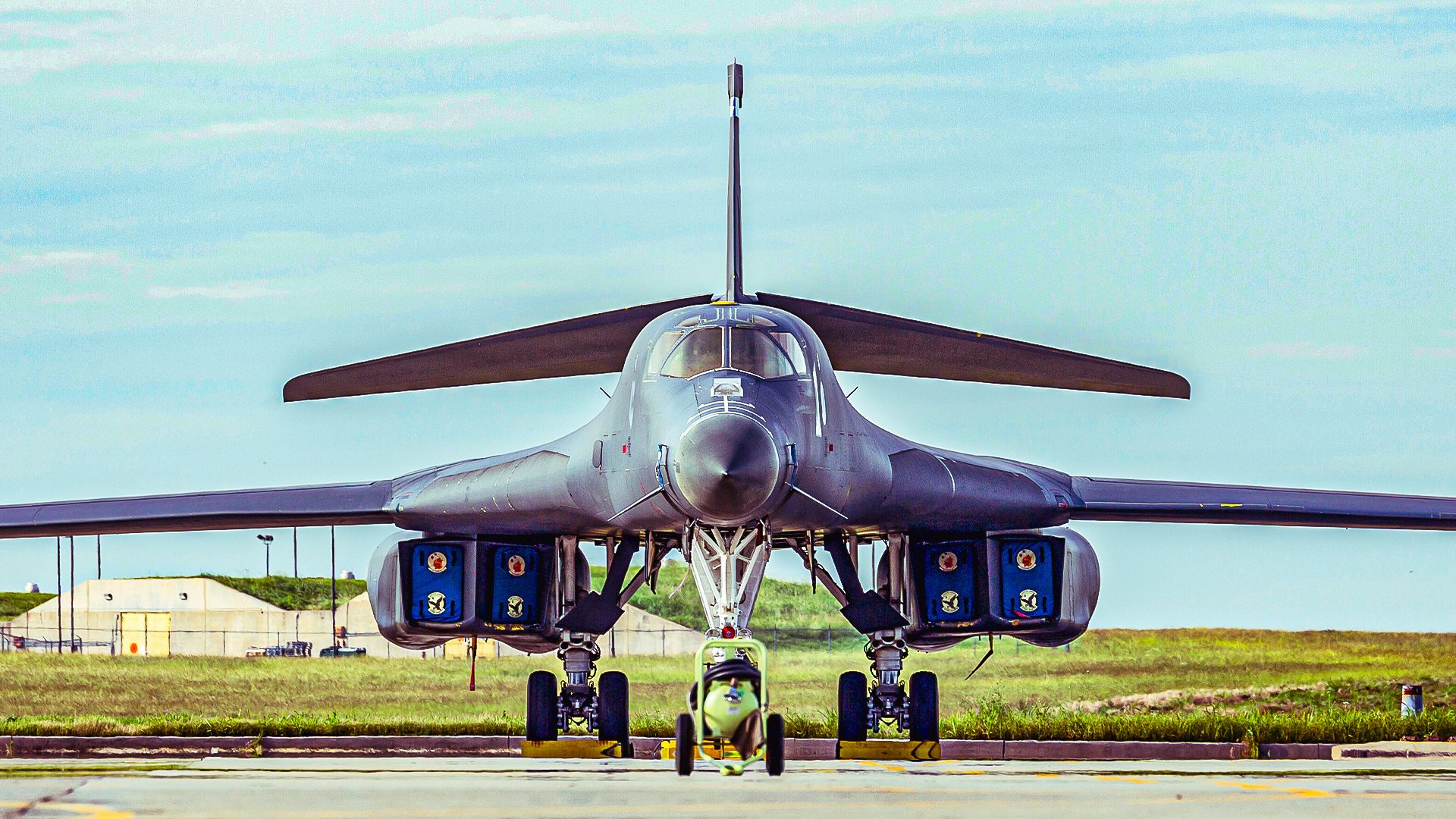
The resurrection of the Rockwell B-1 Lancer highlights its evolution from a canceled project to a pivotal component of the U.S. Air Force’s long-range bomber fleet. Initially designed as a response to changing military needs, the B-1 Lancer underwent significant redesigns to meet the demands of modern warfare. This article explores the historical context, design evolution, and future prospects of the B-1 Lancer, offering insight into its vital role in the U.S. military strategy.
Historical Context and Design Evolution
The B-1 Lancer’s journey began amid the legacy of World War II bombers, particularly the B-52 Stratofortress. The B-52 represented the culmination of bombers from the B-17 to the B-36, designed for altitude, range, and payload to execute strategic bombing missions. Initially, the B-52 accepted attritional losses, relying on massed formations to penetrate enemy defenses. However, advancements in air defense, particularly the Soviet SA-2 Guideline surface-to-air missile, began to diminish the B-52’s operational effectiveness.
In response to these threats, the U.S. Air Force shifted its focus towards speed and altitude. The development of the B-58 Hustler in the late 1950s introduced a high-speed, high-altitude bomber capable of Mach 2. Yet, by the 1960s, evolving air defenses rendered the B-58 ineffective. The ambitious XB-70 Valkyrie aimed for supersonic speeds at 70,000 feet but soon faced obsolescence due to advancements in Soviet air defenses.
As a solution, the U.S. Air Force initiated the B-1A Lancer program in the mid-1960s, emphasizing low-level penetration capabilities. This design sought to exploit the challenges radar systems faced in tracking low-flying aircraft. Unfortunately, the B-1A’s development faced setbacks, including increasing Soviet air defense systems and high costs. Ultimately, only four B-1A prototypes were constructed, and the program was shelved in favor of alternative strategies.
The Resurgence as the B-1B Lancer
In the late 1970s, as air defense technology continued to evolve, the U.S. Air Force revisited the B-1 project, redesigning it for low-altitude operations. The B-1B Lancer emerged in the 1980s, featuring a reduced speed of Mach 1.25 and enhancements aimed at minimizing radar cross-section. This strategic pivot was driven by the realization that traditional high-altitude bombers were increasingly vulnerable.
The B-1B Lancer was produced in greater numbers, with 100 units built, and remains the U.S. Air Force’s only supersonic bomber. It is designed to carry a maximum payload of approximately 75,000 pounds (34,019 kilograms) and has become integral to the U.S. military’s long-range bombing capabilities. The aircraft has demonstrated versatility in various conflicts, serving as both a bomber and a missile truck due to its substantial payload capacity.
The B-1B’s operational effectiveness has been bolstered by its ability to operate in environments dominated by advanced air defense systems. It has been employed extensively in operations in Iraq and other conflict zones, reinforcing its value as a critical asset in the U.S. Air Force’s arsenal.
As the B-1B approaches its retirement, with projections indicating a phase-out between 2028 and 2032, the U.S. Air Force is preparing to introduce the B-21 Raider. This next-generation stealth bomber is designed to refine the capabilities established by the B-2 Spirit, ensuring that the U.S. maintains its strategic edge in aerial warfare.
The B-1 Lancer’s legacy is a testament to the adaptability of military technology in response to evolving threats. While it has successfully bridged the gap between older bomber doctrines and contemporary requirements, the future of aerial combat will likely rely on the stealth capabilities and precision strike options presented by the B-21 Raider. As the B-1B Lancer’s operational lifespan concludes, it leaves behind an important chapter in the history of military aviation.