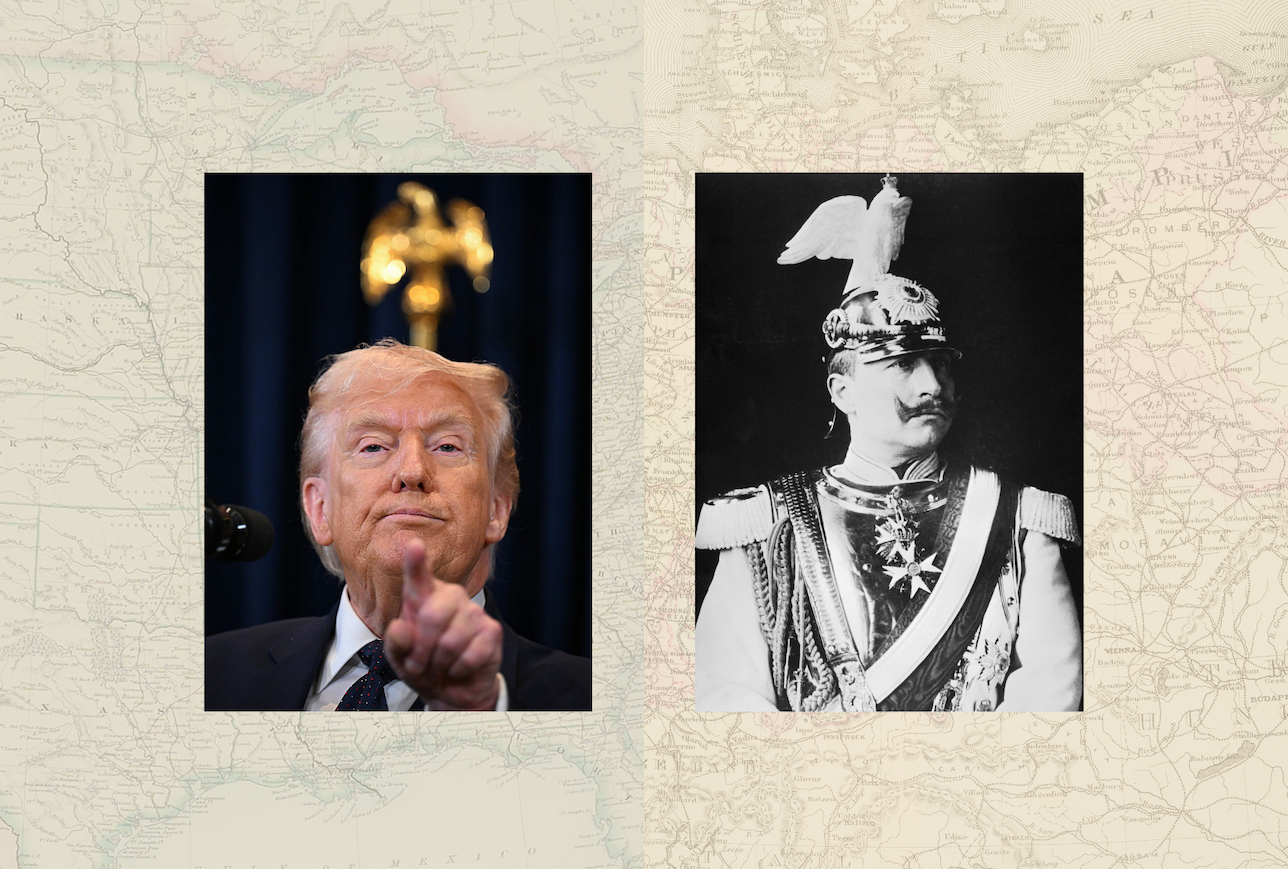
In recent discussions surrounding leadership and foreign policy, parallels have emerged between the leadership styles of two prominent figures from vastly different eras: Kaiser Wilhelm II of Germany and Donald Trump, the former president of the United States. Both leaders exhibited grandiose self-importance and engaged in outlandish foreign policy proposals, leading to significant international consequences. This comparison raises questions about the impact of such personalities on global stability.
Kaiser Wilhelm II, who ruled from 1888 until the abdication of the German throne in 1918, is often remembered for his erratic behavior and intemperate remarks that escalated international tensions. His public statements frequently sparked outrage, compelling his advisers to retract or mitigate his more reckless suggestions. Ultimately, his leadership contributed to the outbreak of World War I, a conflict that resulted in unprecedented devastation and loss of life.
In contrast, Donald Trump entered the political arena in the 21st century, presenting himself as a champion of the “forgotten American.” His approach to governance mirrored some aspects of Wilhelm’s, including a penchant for dramatic rhetoric and a belief in his own exceptionalism. Trump’s presidency was marked by controversial statements and policy decisions that often provoked international backlash, though the scale of his actions has yet to parallel the catastrophic outcomes associated with Wilhelm’s reign.
Leadership Styles and Political Impact
The historical context of Kaiser Wilhelm II‘s rule reveals a leader who, despite his flaws, advocated for certain progressive reforms. He expressed support for labor rights and the establishment of a welfare state, aiming to stabilize the turbulent German Empire, often referred to as the Second Reich. His contradictory views on foreign alliances—oscillating between advocating for cooperation with powers like China and Japan and warning of the “yellow peril”—exemplify the unpredictable nature of his leadership.
Conversely, Donald Trump‘s leadership style has been characterized by a disregard for established political norms. His bold assertions and impulsive policy proposals, such as contemplating nuclear options to address natural disasters, reflect a leader who operated outside traditional diplomatic frameworks. While Trump’s rhetoric has drawn parallels to Wilhelm’s bombastic style, the contemporary political landscape presents different challenges and mechanisms of accountability.
Historians, such as Christopher Clark, have examined the extent of Wilhelm’s influence over German policy, suggesting that while he was an irritant in European politics, his role was often overstated. Trump’s presidency similarly raised questions about the consolidation of power and the dynamics between the executive branch and other government entities.
The Risks of Overconfidence
Both leaders demonstrated an inflated sense of their own capabilities, which often led to reckless decisions. Wilhelm’s grandiose visions included aspirations for colonial expansion in Latin America and aggressive naval ambitions, which ultimately failed to materialize. His infamous comments, such as those made in a 1908 Daily Telegraph interview, where he criticized other nations with little regard for the diplomatic repercussions, underscore how his overconfidence fueled international crises.
In the case of Trump, his administration’s volatility and controversial statements have similarly raised alarms. While the consequences of his actions have not yet led to a global conflict like World War I, they have undeniably strained alliances and provoked international scrutiny. The potential risks of his leadership style were starkly highlighted by the events leading up to 2026, a year that saw renewed tensions and conflicts involving the United States.
The lessons from Kaiser Wilhelm II and Donald Trump serve as reminders of the complex interplay between personality, leadership, and historical context. As the world reflects on these figures, it remains critical to consider how individual leaders shape the course of history and the importance of accountability in governance.