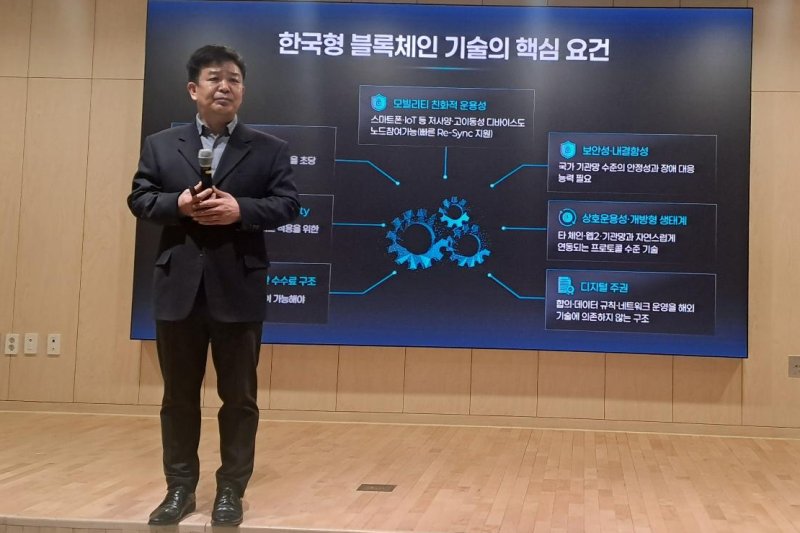
Participants at a forum hosted by the Korea Blockchain Association in Seoul have called for the South Korean government to implement more proactive measures to promote blockchain technologies. This appeal comes amid concerns that the country’s regulatory framework is hindering innovation in the sector. The forum, held on December 3, 2023, highlighted the need for a shift from a permission-based approach to a more flexible regulatory environment.
During the event, Moon Young-bae, Vice Chairman of the association, criticized the existing positive regulation system. Under this framework, companies must obtain explicit permission before launching new business activities related to blockchain. Moon contrasted this with the regulatory practices in the United States and other advanced economies, which often employ a negative regulatory approach. This model allows business activities to proceed unless explicitly prohibited, fostering a more conducive environment for innovation.
“The Seoul administration has attempted to heavily regulate the blockchain industry related to coins or tokens,” Moon stated. “On the flip side, however, there is extraordinary technology at work called blockchain.” He emphasized that blockchain technology, characterized as a decentralized and distributed digital ledger, has the potential to securely record transactions across various platforms in a transparent and tamper-resistant manner.
Moon urged the government to invest more effort in developing blockchain solutions. He suggested that South Korea should consider creating its own main network to support real-world blockchain operations. “Given its upside potential, we need to put more effort into developing blockchain technology,” he remarked.
The Vice Chairman also pointed out that blockchain could play a significant role in enhancing the security and trustworthiness of artificial intelligence applications. He drew a historical analogy, stating, “In the early 20th century, there were lots of car accidents, which hindered the widespread adoption of automobiles. Traffic lights played a crucial role in increasing automobile use by improving safety. By ensuring the trustworthiness of AI-related data and solutions, blockchain can strengthen AI in a similar way.”
Echoing similar sentiments, Lee Sang-yoon, CEO of Bloom Technology, highlighted the advantages of deregulation in the blockchain sector. His company, which has developed its own main network called Locus Chain, is a member of the Korea Blockchain Association. “Countries like the United Arab Emirates and Switzerland have significantly deregulated the blockchain industry,” Lee noted. “Following the inauguration of President Donald Trump earlier this year, the United States is also moving in that direction.”
Lee expressed optimism about the future of blockchain, stating, “The advent of the decentralized Internet era is inevitable. It will help address many challenges people face down the road.”
The discussion at the forum underscores a growing consensus among industry leaders that South Korea must adapt its regulatory framework to keep pace with global trends in blockchain technology. As countries worldwide increasingly embrace more flexible regulatory approaches, the pressure mounts for South Korea to reconsider its stance in order to foster innovation and growth in this critical sector.