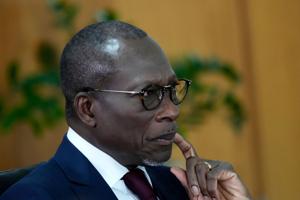
Benin President Patrice Talon condemned a foiled coup attempt on December 7, 2025, which was thwarted by the country’s military. The incident unfolded in the capital, Cotonou, where sporadic gunfire was reported. A group of soldiers, identifying themselves as the Military Committee for Refoundation, announced on state television the dissolution of the government, marking yet another potential upheaval in West Africa.
In a televised address, Talon expressed his condolences for the victims of what he described as a “senseless adventure.” He stated, “I assure them that we will do everything in our power to find them safe and sound.” Although the president’s exact location remained undisclosed, his comments marked his first public response since the attempted coup.
The Interior Minister, Alassane Seidou, confirmed via a Facebook video that the coup attempt had been “foiled.” He detailed that early on Sunday, a small faction of soldiers attempted to destabilize the state. Seidou praised the Beninese Armed Forces for their dedication to the republic, affirming their commitment to maintaining order.
Regional Response and Arrests
The response from the regional bloc, the Economic Community of West African States (ECOWAS), was swift. ECOWAS condemned the coup attempt as “a subversion of the will of the people of Benin.” It ordered the deployment of troops from Nigeria, Sierra Leone, Ivory Coast, and Ghana to assist in safeguarding the constitutional order. Nigerian President Bola Tinubu commended his armed forces for their role in restoring stability in Benin.
Local media reported that authorities arrested 13 soldiers involved in the coup, although it was unclear if the leader, Lt. Col. Pascal Tigri, had been captured. Following the coup attempt, gunfire was heard in various areas of Cotonou; however, the city has since returned to a relatively calm state.
Earlier in the day, the Military Committee for Refoundation had declared Tigri as its president. This incident marks a concerning trend in West Africa, where military coups have become increasingly common. Just last month, a coup in nearby Guinea-Bissau led to the ousting of former President Umaro Embalo after a contentious election.
A History of Political Instability
Since gaining independence from France in 1960, Benin has experienced multiple coups. Fortunately, the nation has maintained relative political stability since 1991, following the two-decade rule of Marxist-Leninist leader Mathieu Kérékou. Talon has been in power since 2016 and is set to step down in April 2026 after the upcoming presidential election. His party’s candidate, former Finance Minister Romuald Wadagni, currently holds a strong position as the favorite to succeed him.
In a notable development, the electoral commission rejected opposition candidate Renaud Agbodjo for lacking sufficient sponsorship. Furthermore, earlier this year, two associates of Talon received 20-year prison sentences for their alleged involvement in a coup plot.
As the situation develops, the focus remains on ensuring the safety of those affected and the integrity of Benin’s democratic institutions.