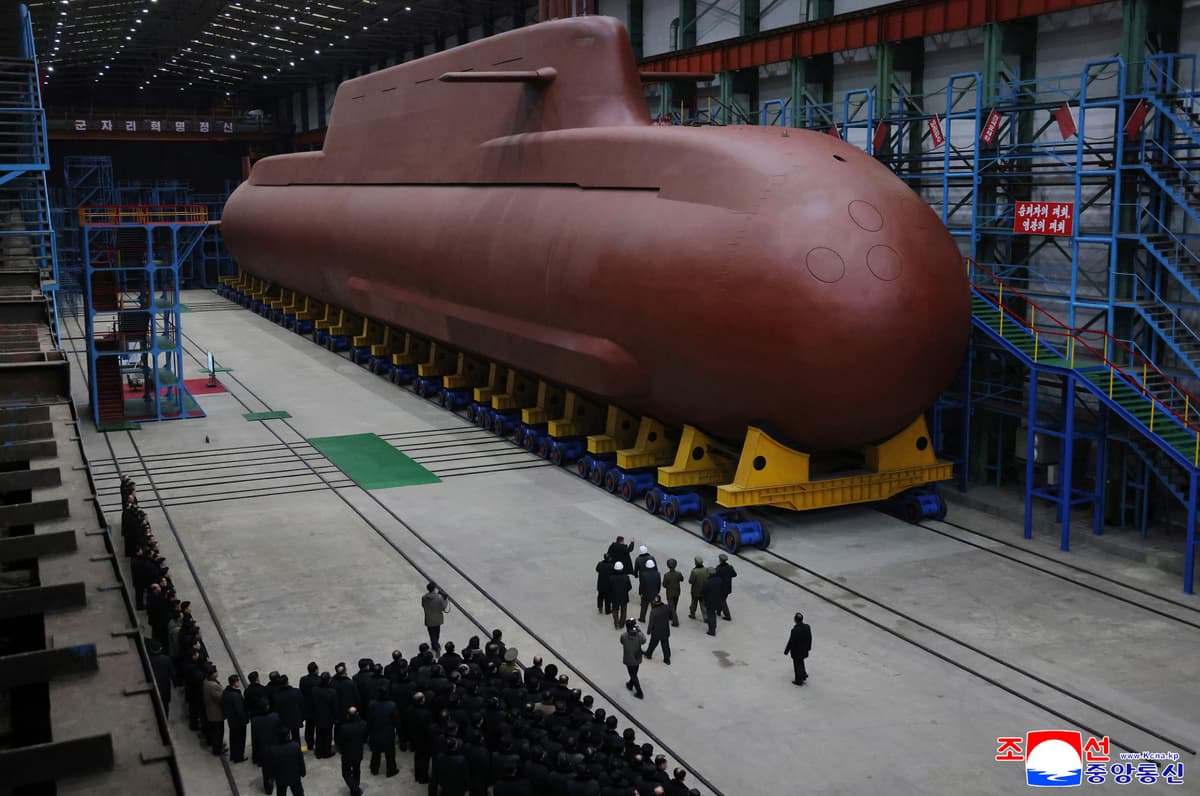
North Korea and South Korea are intensifying their military capabilities with ambitious nuclear submarine programs. North Korea is reportedly finalizing its first nuclear-powered submarine, while South Korea has initiated plans for its own nuclear submarine at a shipyard in Philadelphia. This development marks a significant escalation in military competition on the Korean Peninsula.
The North Korean submarine, described as a critical step in enhancing its naval power, is nearing completion, with state media showcasing images of the vessel. According to North Korean officials, this submarine will bolster the country’s deterrence capabilities against perceived threats, particularly from the United States and South Korea. The launch of this submarine is anticipated to occur in mid-2024.
In parallel, South Korea’s defense ministry has confirmed plans to construct its first nuclear submarine. The project is set to take place at a shipyard in Philadelphia, with the aim of enhancing the nation’s naval strength. South Korean officials indicate that this initiative is part of a broader strategy to modernize its military forces. The country’s commitment to developing nuclear-powered vessels is expected to provide it with greater operational flexibility and extended range.
Strategic Implications for the Region
The emergence of these submarine programs raises concerns among regional and global security analysts. Both nations are responding to increasing tensions and military drills in the region. North Korea’s advancements in submarine technology could lead to more aggressive posturing, especially given its history of provocative actions.
South Korea’s decision to pursue nuclear submarines aligns with its efforts to counterbalance North Korean military developments. The introduction of these vessels is likely to enhance South Korea’s deterrent capabilities, offering a strategic edge in potential conflicts. The South Korean government has emphasized the importance of maintaining a strong defense posture in light of North Korea’s nuclear ambitions.
In the broader context of international relations, these developments may prompt responses from global powers. The United States, a key ally of South Korea, may increase its military presence in the region to reassure its partners and deter North Korean aggression. Additionally, the situation could lead to renewed discussions on nuclear non-proliferation and arms control in East Asia.
International Reactions and Future Prospects
The international community is closely monitoring these developments. Diplomatic efforts aimed at de-escalating tensions on the Korean Peninsula may face challenges as both nations advance their military capabilities. Experts argue that the arms race could undermine stability in the region and complicate future negotiations on denuclearization.
As both North and South Korea move forward with their submarine programs, the potential for conflict remains a pressing concern. The stakes are high, and the implications of these military enhancements could reverberate far beyond the Korean Peninsula. The situation calls for careful diplomacy and engagement to address the underlying issues and prevent escalation.
In conclusion, the advancements in nuclear submarine programs by North Korea and South Korea signify a new chapter in their ongoing rivalry. With both nations investing heavily in their naval capabilities, the balance of power in the region is shifting. The international community must remain vigilant as these developments unfold, seeking avenues for dialogue and peaceful resolution.