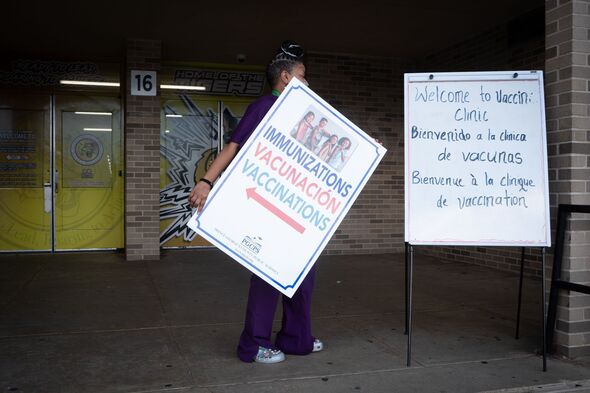
The United States is experiencing its most significant outbreak of measles since 1992, as vaccination rates continue to decline. According to the Centers for Disease Control and Prevention (CDC), there have been 2,065 reported cases and three fatalities attributed to measles in 2023 alone. Officials express concern that the country could lose its measles elimination status as soon as this month.
Measles, along with mumps and rubella, is preventable through the MMR vaccine. Currently, the national vaccination rate for the MMR vaccine stands at 92.5 percent. This figure, however, conceals significant disparities in vaccination coverage across different states. For instance, Utah reports only 89 percent of kindergartners vaccinated for the 2023-2024 school year. South Carolina is slightly better at 92 percent, while Arizona lags behind at 89 percent.
Worsening Public Health Outlook
The CDC states that the MMR vaccine is 97 percent effective at preventing measles for individuals who receive both doses. A single dose offers a 93 percent efficacy rate. The World Health Organization (WHO) defines measles elimination as the absence of sustained transmission of the virus for at least 12 months.
Despite the decline of measles cases globally—evidenced by an 88 percent reduction since 2000—new infections have persisted weekly in the U.S. in 2025. By the end of 2024, 81 countries had achieved measles elimination, with another 15 countries—primarily in the Pacific and parts of Africa—reaching the status in 2025.
Dr. Renee Dua, a medical adviser, emphasized the direct correlation between the current outbreak and decreasing childhood vaccination rates. In her statement to the Daily Mail, she noted, “Measles requires about 95 percent community immunity to prevent spread, and many regions are now below that threshold.” She highlighted that preventable outbreaks, hospitalizations, and deaths are the direct consequences of these public health failures.
The Dangers of Measles
Measles remains one of the most contagious diseases globally. Individuals who are unvaccinated face a 90 percent risk of contracting the disease if exposed, which can occur simply by sharing air with an infected person. The illness is caused by a virus that leads to flu-like symptoms, followed by a distinctive rash that usually starts on the face and spreads downward.
In severe cases, complications can include pneumonia, seizures, brain inflammation, and even death. According to estimates, approximately three in 1,000 individuals infected with measles will die from the disease. As vaccination rates continue to decline, the public health implications could be severe, necessitating urgent attention to restore community immunity and prevent further outbreaks.