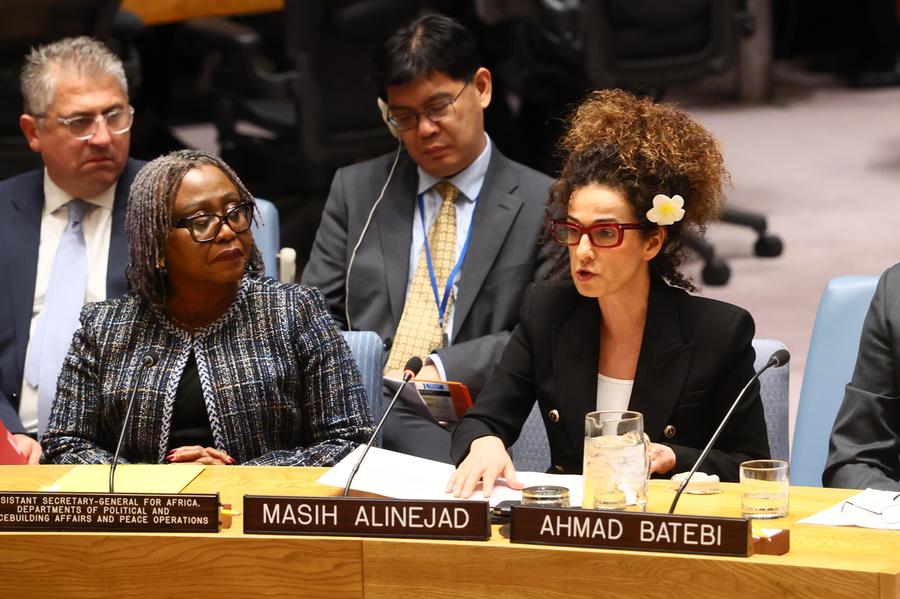
UPDATE: Masih Alinejad, a prominent Iranian dissident, has delivered a powerful address at the UN Security Council, exposing the UN’s troubling silence on the Iranian regime’s brutal crackdown on protests. This urgent session, held on October 7, 2023, marks a critical moment for the international community’s response to human rights abuses in Iran.
Alinejad’s testimony comes as protests erupt across Iran, yet UN Secretary-General António Guterres has faced criticism for his muted response to the regime’s violence. “The secretary-general has not spoken publicly against the massacre,” Alinejad stated, questioning Guterres’s lack of action against the Islamic Republic.
Earlier today, Alinejad, who has survived multiple assassination attempts orchestrated by the Iranian government, addressed the council, highlighting the plight of those fighting for freedom in Iran. Her emotional appeal included the names of protesters killed by the regime, underscoring the urgent need for international intervention.
Despite the escalating crisis, the UN has been criticized for its historical bias against Israel while failing to condemn Iran’s actions. Notably, Afsaneh Nadipour, an Iranian representative, was elected to the UN Human Rights Council advisory committee, raising eyebrows about the UN’s commitment to human rights.
“I am a woman from a small village in northern Iran. Jailed for protesting. Beaten for showing my hair… Assassins were sent to New York, three times, to kill me. And now I’m supposed to sit next to them at the UN Security Council,” Alinejad shared on social media after her address.
The session marks the first significant discussion of the Iranian uprisings at the UN since the unrest began, prompting questions about the organization’s priorities and its silence on human rights violations. Alinejad’s presence at the council highlighted a stark contrast to the UN’s previous inaction, with many calling for a reevaluation of its stance on Iran.
As Alinejad’s voice reverberates through the UN hall, the question remains: will the international community finally take a stand against the Iranian regime? Or will the UN continue its tradition of silence in the face of tyranny? The ongoing developments in Iran demand immediate attention from global leaders and organizations.
As this story unfolds, international observers will be watching closely. The UN’s response to Alinejad’s testimony could redefine its role in advocating for human rights, especially in a world increasingly aware of Iran’s repressive actions against its own people.
Stay tuned for updates on this developing story as more details emerge about the UN’s actions and the international community’s response to the crisis in Iran.