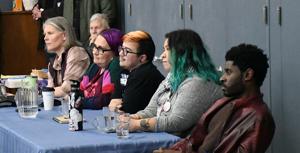
Community members in Hood River came together on January 19, 2024, at Riverside Community Church to honor the legacy of Dr. Martin Luther King Jr. The event, themed “Hope is in Our Hands,” featured inspiring performances, including music from gospel singer Cynta Butts, and an interactive panel discussion emphasizing collective action and community resilience.
The panel, hosted by Rev. Vickie Stifter, highlighted diverse voices from the community. It included panelists such as Breen Goodwin, director of the Columbia Gorge Food Bank; Amber Rose, community engagement coordinator at Hood River Latino Network; Kit Clasen, project coordinator for Columbia Gorge Pride Alliance; August Oaks, creative producer with Black in the Gorge; and Rosie Strange, a registered member of the Confederate Tribes of the Warm Springs.
“We want to acknowledge the fact that these are hard times,”
Stifter stated during the discussion. She emphasized the importance of recognizing the emotional toll of current events amid ongoing struggles for justice and equity.
Throughout the session, panelists addressed difficult topics while sharing personal experiences of joy and sorrow. For instance, when asked about sources of joy, Oaks spoke of the therapeutic benefits of gardening, while Strange highlighted the significance of community and movement in her life.
The conversation shifted to the challenges faced within the community. Goodwin noted the emotional impact of recent cuts to federal food assistance, stating, “In the food banking world, it’s been pretty striking to have federal funds cut. There are no words that can justify the decisions to withhold life-sustaining support.”
Strange expressed her ongoing grief over global injustices, particularly the situation in Palestine, saying, “I’ve been crying for two and a half years. The injustice… has cracked open my heart in ways I didn’t think were possible.”
Panelists also shared moments of hope, with Rose recalling a large march held in April that energized the community. “More people than I had ever seen showed up in one place together. That was shocking and incredible,” she said.
“I am filled with so much hope, and one primary source of my hope is engaging with empathy,”
Oaks added. He stressed the importance of understanding one another’s values in fostering collaboration, particularly in today’s fragmented society.
As the discussion progressed, the panelists identified significant challenges facing the community in the coming year, including the visibility of BIPOC individuals and the need for greater outreach to marginalized groups. Strange pointed out, “Looking around this room, there aren’t many BIPOC individuals. Why are they hiding? Now more than ever, we need to show up for people outside of our circles.”
Clasen urged attendees to stay informed and engaged, stating, “I’m begging folks to pay attention to what’s happening. There are so many folks I interact with who say they don’t engage with the news because it’s too hard or too scary.”
Goodwin emphasized that food insecurity is not merely a matter of supply, but a broader issue tied to power dynamics and societal structures. “This is not a food issue. This is a power issue. This is a class issue,” she explained, encouraging attendees to educate themselves on interconnected social issues.
The event concluded with a call to action, inspiring community members to unite and take proactive steps toward change. As the participants left, the message of hope, empathy, and collective responsibility resonated, reinforcing the enduring legacy of Dr. King’s vision for equality and justice.