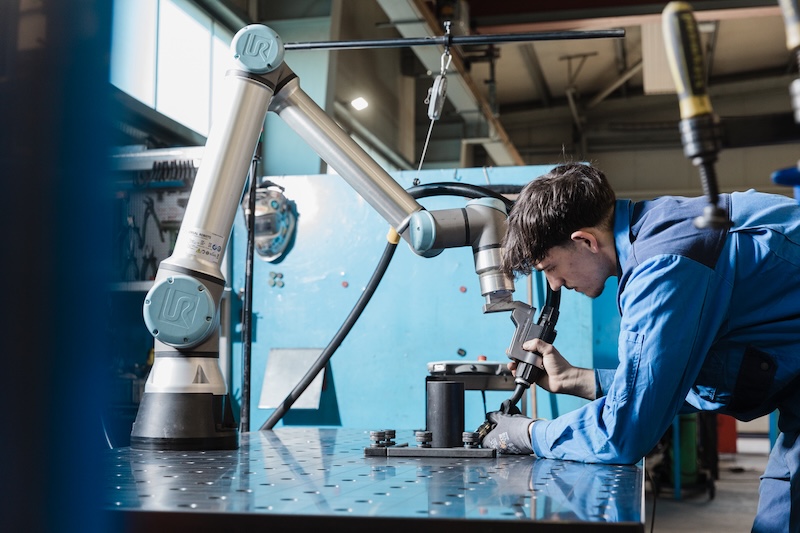
The robotics industry is on the cusp of significant transformation, with predictions highlighting key trends that will shape the future of artificial intelligence (AI) and automation. According to Anders Billesø Beck, Vice President of AI Robotics Products at Universal Robots, four distinct trends are set to redefine how robots generate value starting in 2026 and beyond.
Increasingly Intelligent Automation
As AI technology continues to advance, robots will become more intelligent and capable of performing complex tasks. The integration of enhanced algorithms will allow robots to process and analyze data with greater efficiency. This shift will not only improve productivity but also enable robots to make real-time decisions based on environmental changes.
Beck emphasizes the importance of “smarter math” in this evolving landscape. The application of advanced mathematical models will facilitate better prediction and decision-making processes within robotic systems. As a result, businesses can expect robots to play a more strategic role in operations, significantly impacting various industries.
Enhanced Collaborative Behaviors
Another trend that Beck notes is the emergence of cooperative behaviors among robots. Future robotic systems will be designed to work alongside humans and other machines more seamlessly. This collaboration will enhance workplace efficiency, allowing for smoother interactions and increased output in production settings.
The development of robots capable of understanding and responding to human actions will be crucial. This capability will enable workers to engage more effectively with robotic systems, fostering an environment where humans and machines complement each other’s strengths.
The rise of collaborative robots, or cobots, is expected to be a game changer in manufacturing and logistics, with companies leveraging these technologies to streamline operations and reduce downtime.
Focus on Safety and Compliance
As the deployment of robots becomes more widespread, safety and compliance will remain paramount. Beck points out that future robots will be engineered with enhanced safety features to protect human workers. This focus on safety will not only foster a secure working environment but also ensure adherence to increasingly stringent regulations surrounding automation.
The development of robots equipped with advanced sensors and monitoring systems will play a key role in maintaining safety standards. Companies will be required to invest in these technologies to mitigate risks and ensure compliance with relevant safety regulations.
Environmental Sustainability and Energy Efficiency
The final trend highlighted by Beck is the emphasis on environmental sustainability within the robotics industry. As businesses face mounting pressure to reduce their carbon footprints, robots will be designed with energy efficiency in mind.
This shift towards sustainable practices will involve the development of robots that consume less energy and utilize environmentally friendly materials. Beck notes that the robotics sector will play a crucial role in helping companies achieve their sustainability goals, which will be vital for future growth and competitiveness.
In summary, the predictions for the robotics industry put forth by Anders Billesø Beck suggest an exciting future shaped by intelligent automation, collaborative behaviors, a focus on safety, and a commitment to sustainability. As we approach 2026, these trends will not only redefine how robots operate but also enhance their ability to create value across various sectors, paving the way for a more efficient and sustainable future.