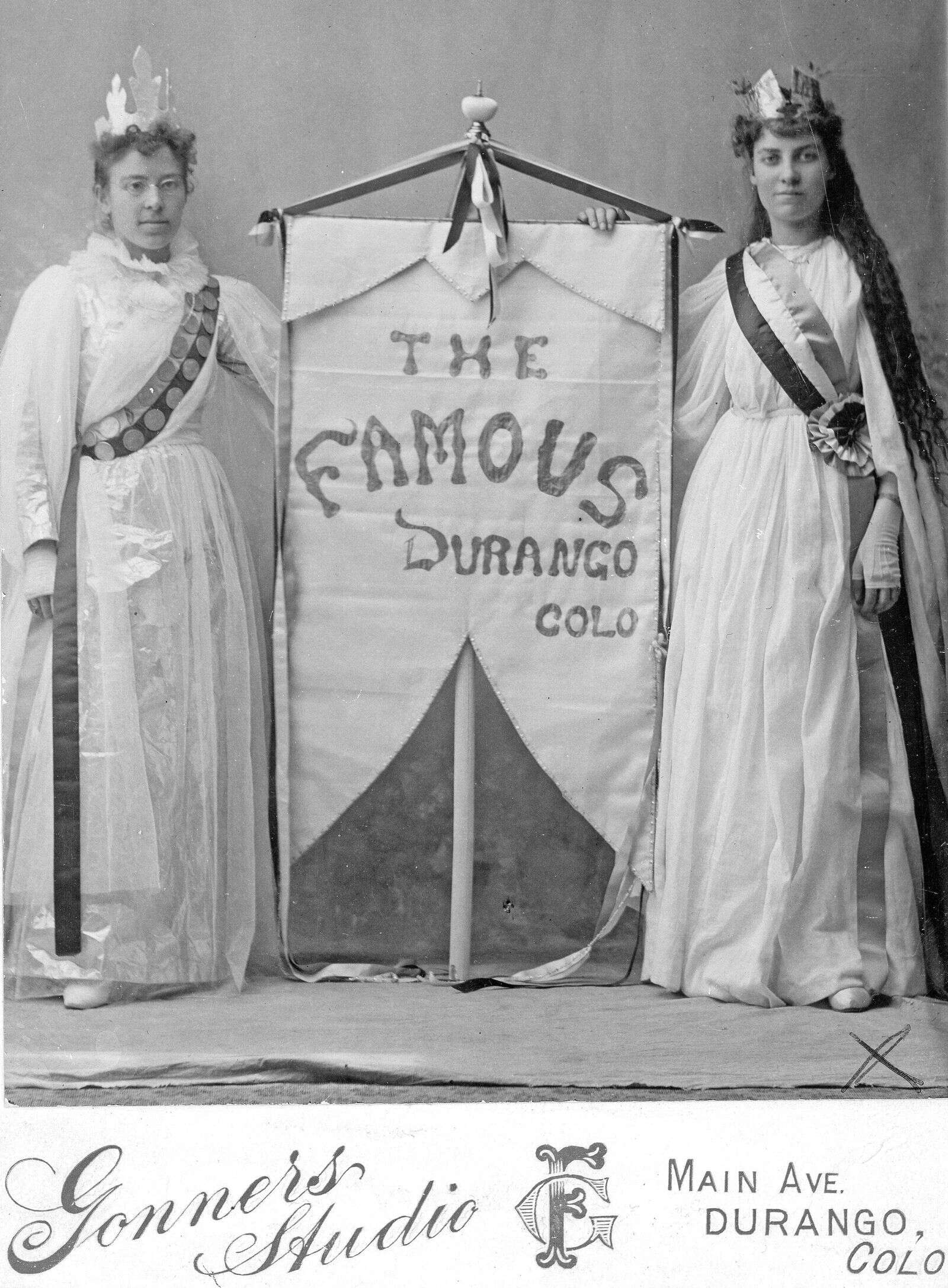
The rich history of Durango, Colorado, is punctuated by the legacy of The Famous Stores Co., a prominent clothing and dry goods retailer that operated from 1892 until 1924. Founded by local entrepreneur B.L. Rachofsky, the store was situated in the 800 block of Main Avenue, in what is now known as the Main Mall area. This establishment not only served the community but also became a significant part of Durango’s commercial landscape.
The Famous Stores Co. was notable for its advertising, including a striking photograph from around 1897. This image features Marie Burch, a figure who is integral to the story of the store. Shortly after the photo was taken, Burch married August Klahn at St. Columba Catholic Church. Klahn’s arrival in Durango dates back to 1880, when he immigrated as a young boy. His family played a vital role in the local economy; his mother and stepfather, F.A. Schluter, founded Schluter Floral, a business that remained operational until 2006.
This photograph and its connection to local history highlight the intertwined stories of families and businesses in Durango. The Famous Stores Co. was not only a retail outlet but also a reflection of the community’s growth and development during its years of operation.
The significance of these historical narratives is preserved thanks to institutions like the Animas Museum, which curates collections that document the region’s past. Ed Horvat, a representative of the museum, emphasizes the importance of such artifacts in understanding the cultural and economic evolution of Durango.
As communities continue to evolve, artifacts like the Gonner advertising photo serve as reminders of the past, enriching the narratives of those who lived and worked in these areas. The legacy of The Famous Stores Co. and the lives it touched illustrate the lasting impact of local businesses on community identities.
For those interested in exploring more about Durango’s history and its notable figures, the Animas Museum provides valuable resources and insights. The preservation of such stories helps ensure that the past remains a vibrant part of the present, allowing future generations to connect with their heritage.