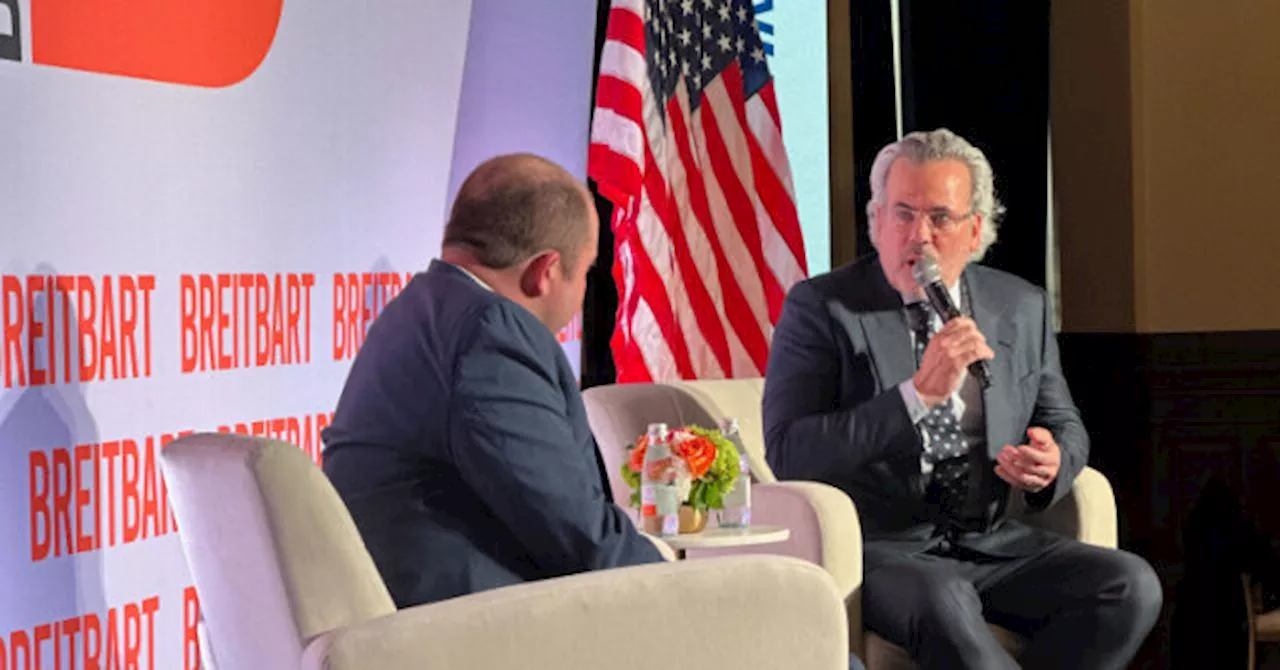
At a policy forum hosted by Breitbart News, Dan Barcelo, the CEO of T1 Energy, expressed strong support for the economic policies of the Trump administration, particularly praising its tariffs and incentives aimed at revitalizing American manufacturing. Barcelo emphasized that these measures are crucial for enhancing the competitiveness of U.S. manufacturers against global powers, especially China.
Barcelo’s remarks were made during an event that featured prominent figures such as Commerce Secretary Howard Lutnick. The forum was led by Editor-in-Chief Alex Marlow and Finance and Economics Editor John Carney. Barcelo highlighted how the combination of tariffs and incentives has not only encouraged domestic investment but also strengthened the overall economic landscape of the United States.
The CEO pointed out that the strategic use of tariffs serves as a disincentive for foreign companies, making it costlier for them to sell goods in the U.S. market. This, he argued, provides an essential advantage for American manufacturers, enabling them to compete more effectively and ultimately create jobs. The forum focused particularly on the solar energy sector, an area where the U.S. seeks to challenge China’s dominance through domestic production initiatives.
Barcelo explained that the administration’s policies foster an environment conducive to capital formation and the development of production facilities within the United States. He noted that when investors have confidence in the potential returns, they are more likely to invest in American manufacturing. This strategy is particularly evident in Texas, where T1 Energy is expanding its solar energy production. The state offers favorable operational costs, benefiting manufacturers.
He further elaborated on the long-term advantages of these policies, arguing that once initial capital investments are made, American manufacturing facilities can operate competitively, especially in regions with lower costs for natural gas, electricity, and water. Barcelo underscored that sustainable trade barriers are vital for ensuring the competitiveness of U.S. manufacturing in the global market.
The discussion also touched on the broader implications of the Trump administration’s economic strategies. Secretary Lutnick emphasized the United States’ significant role as a major consumer market, which enhances its leverage in trade negotiations. He reiterated the importance of ending unfair trade practices to protect American industries.
Barcelo’s comments reflected a consensus that creating a supportive ecosystem through incentives and tariffs is essential for the continued growth of American manufacturing. The forum served as a platform to evaluate the practical effects of these economic strategies on U.S. manufacturers and the economy at large.
Overall, the event illustrated how the combination of tariffs and incentives can bolster the competitiveness of American businesses, facilitating domestic investment and ultimately contributing to the nation’s economic strength. The implications for the solar energy sector, in particular, signal a strategic move to secure a more robust position in the global manufacturing landscape.