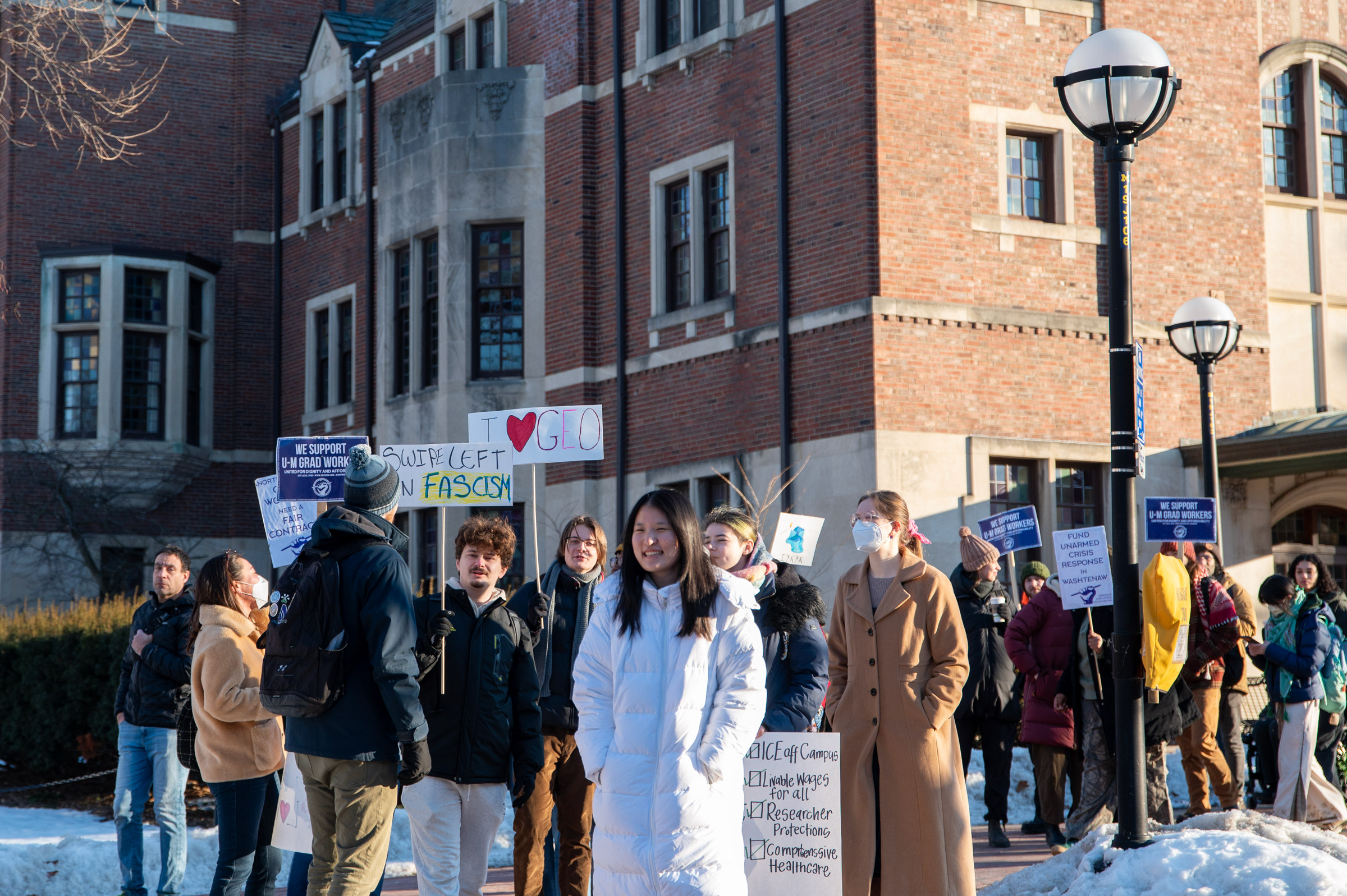
The Graduate Employees’ Organization (GEO) staged a protest outside the Michigan League on February 12, 2026, demanding better wages and protections from U.S. Immigration and Customs Enforcement (ICE). The demonstration followed the cancellation of a scheduled bargaining session between GEO representatives and the University of Michigan’s Human Resources department. The meeting was called off after mediator Micki Czerniak suspended negotiations for a period of 28 days.
Protesters carried signs advocating for fair pay and denouncing both ICE’s presence on campus and perceived repressive measures against their community. The picket, which lasted until 09:30, featured chants such as “Ann Arbor is a union town, if we don’t get it, shut it down,” underscoring the participants’ resolve to unite for their cause.
During the demonstration, Daniel Weaver, chair of GEO’s salary working group, articulated the purpose of the picket. He emphasized the need for a dialogue with the University administration, which he believes has distanced itself from community concerns. “Leadership, in general, works hard to be insulated from a lot of the people who work here because they want to make their own decisions based on their own ideas,” Weaver stated. He added that events like the picket serve to make visible the voices of those affected by the administration’s decisions.
The protest attracted support from various sectors within the University of Michigan community, including faculty members, undergraduate organizations, and local politicians. Among the attendees was Yousef Rabhi, a candidate for the Ann Arbor mayoralty and Washtenaw County commissioner, who expressed solidarity with GEO’s objectives. Holding a sign that read “Fair Work, Fair Pay,” Rabhi remarked, “I’m proud to be here today to join with this awesome group of people to fight for not just better wages and working conditions for themselves, but also a better campus.” He criticized the University’s choice to conduct negotiations remotely and expressed disappointment over the mediator’s decision to suspend bargaining sessions, calling it “disrespectful to tried-and-true labor practice and labor law.”
A central issue of the protest was the demand for improved protections against ICE actions on campus. At a prior bargaining session, GEO proposed measures to limit the University’s cooperation with ICE and called for notifications to be sent out when ICE agents are present on campus.
The presence of undergraduate students at the protest highlighted the broader impact of GEO’s efforts. Siena Ramirez, a junior studying Public Policy and a member of the TAHRIR Coalition, emphasized the importance of solidarity among students. “It’s our responsibility to do what we can to support each other’s rights,” Ramirez stated, affirming her commitment to stand with GEO for the rights of all students.
The sentiments of unity were echoed by Hiab Teshome, GEO president, who noted that support from across the University enhances the organization’s objectives. “Everyone is affected by the things the University does and the things we’re fighting for in our contract,” Teshome said, highlighting the collective power of the community in advocating for change.
As the protest concluded, it became clear that the demands for fair wages and protection from ICE reflect broader concerns about labor rights and community safety on campus. The GEO’s ongoing efforts to engage the University administration will continue to shape the dialogue around these critical issues in the coming weeks.