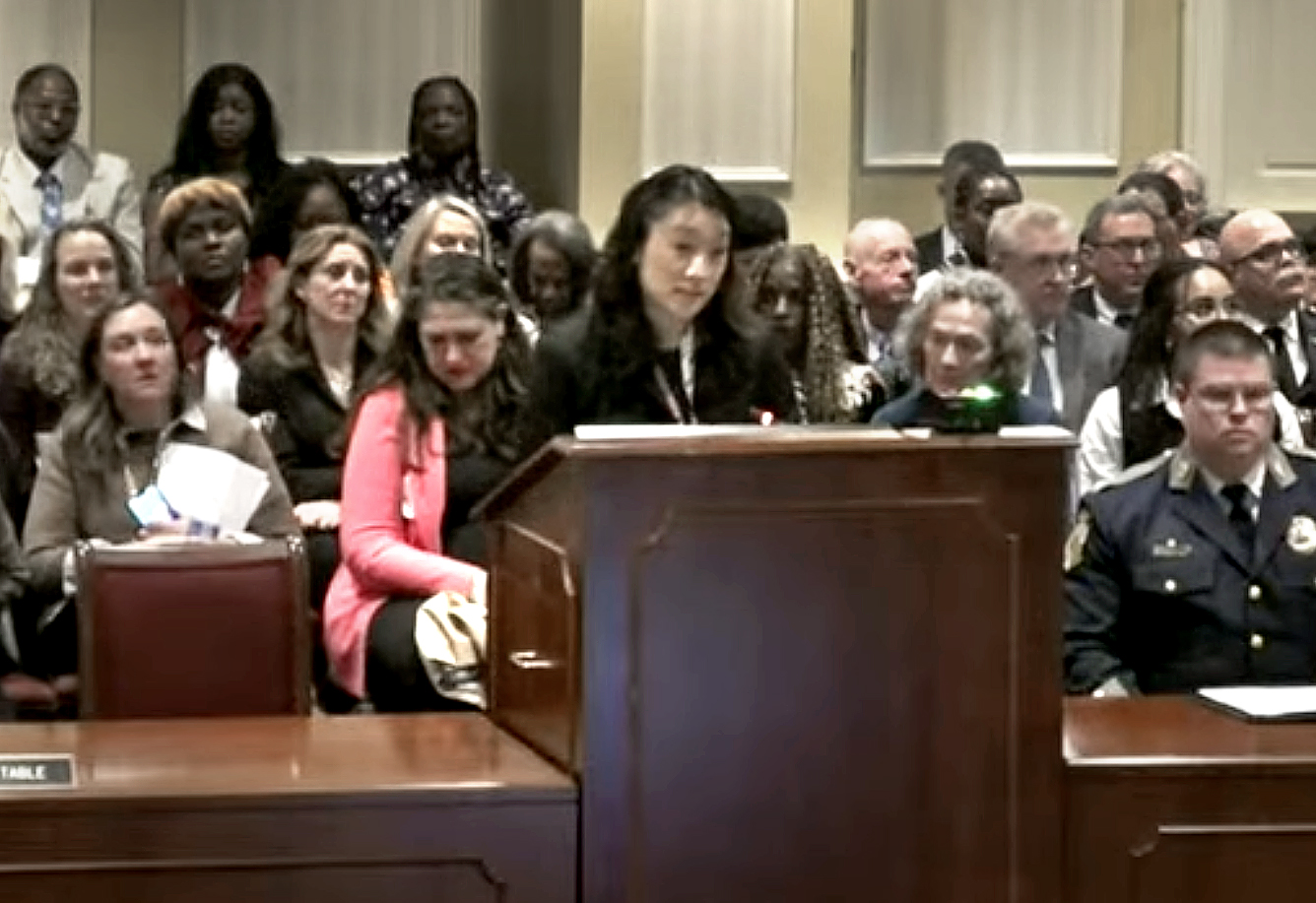
Pamela Chung, the chief of the Baltimore City State’s Attorney’s Office’s Juvenile Division, has expressed strong opposition to the proposed Youth Charging Reform Act currently under consideration in the Maryland General Assembly. During a recent Senate committee hearing, Chung articulated her concerns regarding the legislation, which seeks to reduce the number of children charged as adults in Maryland.
Under existing laws, children as young as 14 and 15 are automatically charged as adults for any crime punishable by a life sentence if committed by an adult. For older teenagers, specifically those aged 16 and 17, automatic adult charges apply to 33 different offenses. The proposed bill, introduced by Democratic lawmakers Sen. Will Smith of Montgomery County and Del. Sandy J. Bartlett of Anne Arundel County, aims to eliminate these automatic charges for 14- and 15-year-olds. If enacted, the legislation would also prevent automatic adult charges for certain serious crimes committed by 16- and 17-year-olds, including robbery and various firearm offenses.
Chung argues that the bill could place the juvenile justice system in a precarious position, lacking the necessary resources to handle such cases. She noted, “The juvenile system is lacking substantive treatment services and programming. Without that, we can’t have an actual rehabilitative system.”
Despite the proposed changes, automatic charging would still apply to severe offenses such as first- and second-degree murder and first-degree rape for those aged 16 and 17. Chung emphasized the importance of the judicial system’s current procedures, stating that judges rely on comprehensive information gathered through the adult system when deciding whether to transfer cases back to juvenile court.
In her interview, Chung elaborated on the implications of the proposed reform. “Judges who are hearing these transfer hearings base their decisions on a lot of information gathered through the adult system, and not through the juvenile system,” she explained. This reliance on adult system data could result in less informed decisions regarding the youth’s future.
Chung raised significant concerns about the Maryland Department of Juvenile Services (DJS). She criticized the agency for not being equipped to handle an influx of youth who would be charged as juveniles under the new legislation. Recent reports have highlighted serious issues within DJS, including inadequate facilities and a lack of compliance with federal standards. Chung stated, “The ombudsman’s report found that an independent agency tasked with investigating the juvenile detention facilities was abysmal.”
The current landscape shows that approximately 55% of youth charged as adults in Baltimore City ultimately find their cases transferred to the juvenile justice system. Chung questioned the rationale behind the proposed reforms, asserting that a hasty legislative process could jeopardize public safety. “Why are we running so quickly to get this bill passed?” she asked, urging stakeholders to engage in a comprehensive dialogue to address the root causes of youth crime.
The conversation surrounding this legislation also includes insights from Betsy Fox Tolentino, the acting secretary of the Maryland Department of Juvenile Services, who supports the reform. Tolentino has indicated that the current system’s challenges require urgent attention and reform to ensure effective rehabilitation for youth offenders.
As discussions continue, the future of the Youth Charging Reform Act remains uncertain. Advocates for reform argue that changes are necessary to protect the rights of young offenders and provide them with opportunities for rehabilitation. In contrast, opponents like Chung warn that without adequate resources and a robust support system, reforms could lead to unintended consequences that compromise public safety and hinder the juvenile justice system’s effectiveness.
The Maryland General Assembly is expected to deliberate on this legislation in the coming weeks, with significant implications for the state’s juvenile justice framework and the lives of young offenders at stake.