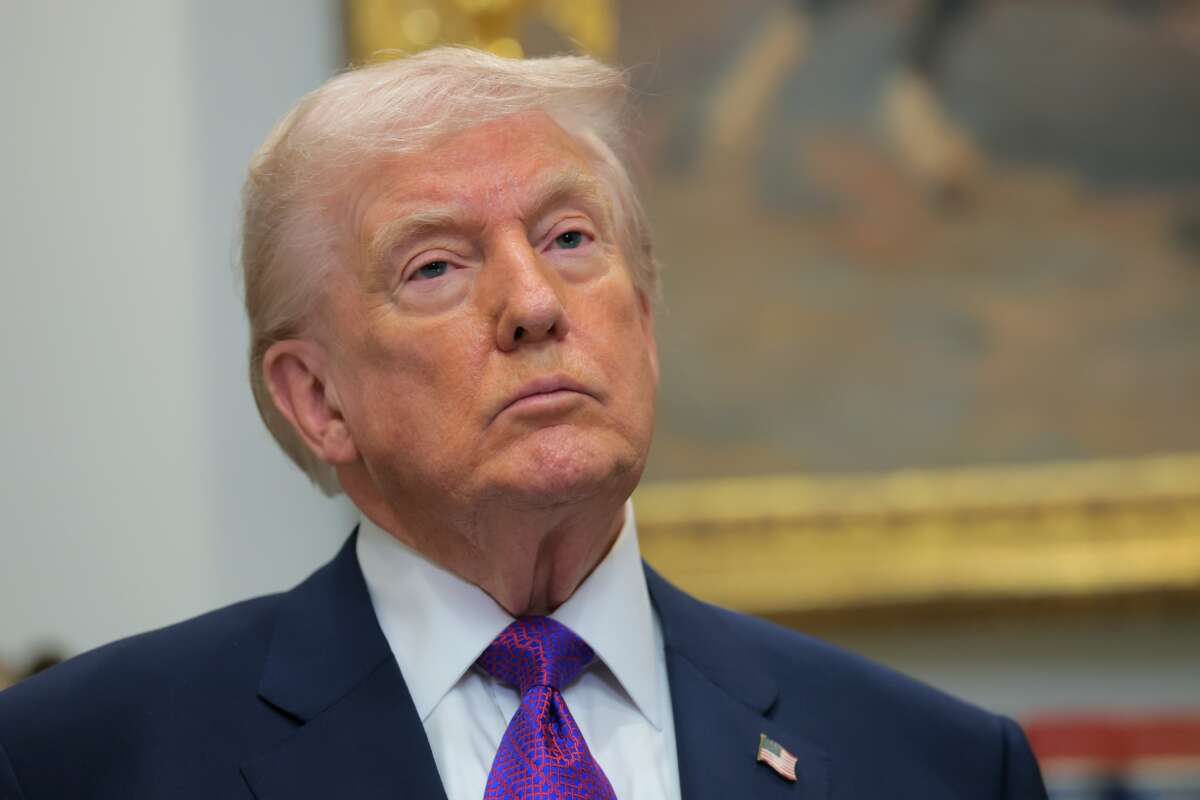
Recent polling indicates that a significant portion of the American electorate perceives President Donald Trump as racist. According to an Economist/YouGov survey published on February 5, 2026, 47 percent of respondents believe the label applies to the president. Only 24 percent disagreed, while 29 percent remained undecided. This finding emerges amid controversy surrounding a video Trump shared on his social media platform, which depicted former President Barack Obama and former First Lady Michelle Obama in a racially charged manner.
The poll reveals a striking shift in public opinion compared to a similar survey conducted in January 2018. At that time, 44 percent of respondents considered Trump to be racist, while 40 percent disagreed. The current poll suggests that fewer individuals are willing to defend Trump against accusations of racism, highlighting a growing discomfort among voters.
The controversy intensified after Trump reposted a video featuring the Obamas on his account on February 5. The video utilized a longstanding racist stereotype, resulting in widespread condemnation. Following the backlash, White House Press Secretary Karoline Leavitt dismissed inquiries about the video, labeling the criticism as “fake outrage.”
In response to internal and external pressure, the White House removed the video, attributing the post to an unnamed staff member. Trump attempted to deflect responsibility, stating he had only reviewed the beginning of the video, which he deemed acceptable. “I looked at the beginning of it. It was fine,” he remarked, contending that “nobody knew” about the offensive content included.
Despite Trump’s assertions, skepticism remains regarding the official explanation from the White House. Critics have pointed out that the video was posted late at night, a time when Trump frequently engages with his social media accounts. In 2017, former White House Press Secretary Sean Spicer stated that posts on Trump’s accounts should be treated as “official statements,” raising questions about the vetting process for such content.
Former President Obama addressed the incident in a recent interview with YouTuber Brian Tyler Cohen, expressing concern over Trump’s actions. He noted that many Americans “find this behavior deeply troubling” and highlighted a perceived double standard in how the media and public reacted to his presidency compared to Trump’s. “There doesn’t seem to be any shame about this among people who used to feel like you had to have some sort of decorum and a sense of propriety and respect for the office,” Obama stated.
The implications of the poll findings are significant as they reflect a broader discourse on race and leadership in the United States. The perception of Trump as a racist could have lasting effects on his political standing and the Republican Party’s image ahead of upcoming elections.
This polling data and the surrounding controversy underscore ongoing tensions in American society regarding race, representation, and accountability among public officials. As the political landscape evolves, the responses to such issues will undoubtedly shape future discussions and electoral outcomes.