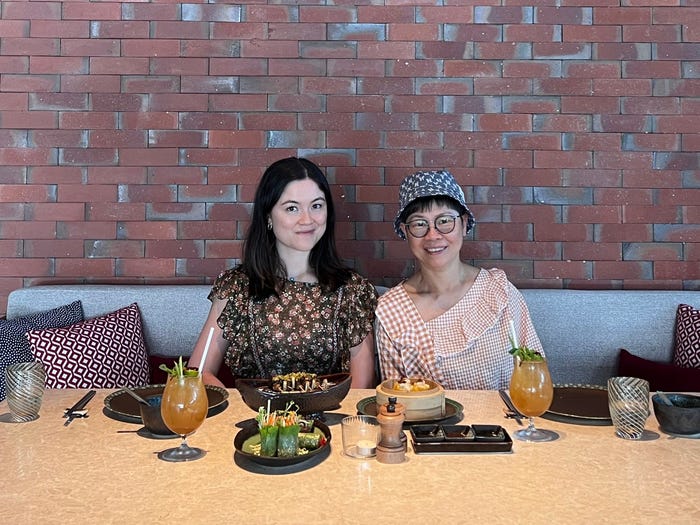
The rising trend of “Chinamaxxing” on social media has sparked a wave of interest in Chinese cultural practices, as individuals share lifestyle hacks and wellness tips rooted in tradition. Faye Bradley, who grew up in Hong Kong with a Chinese mother, reflects on four enduring habits she learned from her family that continue to shape her daily life.
Bradley first encountered the term “Chinamaxxing” on platforms like TikTok and found herself filled with pride as she recognized the cultural significance of the practices being highlighted. From wearing red for luck during Lunar New Year to the practice of removing outdoor shoes indoors, these customs have become a source of identity and connection for many. Notably, the phrase “You met me at a very Chinese time in my life,” popularized by Jimmy O Yang, has resonated widely, accumulating over 6.5 million views on social media.
As Bradley observes the growing appreciation for these traditions, she notes that some interpretations can oversimplify complex practices. For instance, traditional Chinese medicine (TCM) encompasses much more than trendy teas, and concepts such as feng shui extend beyond mere rearrangement of furniture.
Four Essential Habits from a Chinese Upbringing
Bradley identifies four key practices her mother instilled in her that have remained relevant throughout her life. These habits, though gaining popularity, are not new to her.
The first habit revolves around the use of White Flower Oil, an herbal ointment renowned for its versatility. As a child, Bradley’s mother would apply a small amount of this concentrated oil to relieve ailments like tummy aches and motion sickness. The combination of menthol, eucalyptus, and lavender provides immediate relief, and Bradley now carries this essential remedy during her travels, keeping it as a staple for various minor health issues.
Another vital practice is starting each day with a hot cup of water. Despite the stifling heat of Hong Kong summers, Bradley’s mother discouraged cold beverages in the morning. TCM posits that warm water aids digestion and circulation, helping to maintain the body’s internal balance. Initially skeptical, Bradley embraced this practice in her late teens and now appreciates the steady energy and calmness it brings to her mornings.
The third habit involves avoiding going to bed with wet hair. Bradley recalls her mother warning her that this could lead to illness. Now, she acknowledges that sleeping with damp hair can disrupt sleep quality and leave her feeling uncomfortable. Blow-drying her hair has become a ritual that signifies the end of the day and ensures she wakes up refreshed.
Lastly, Bradley emphasizes the importance of the rice cooker, an appliance she found essential when she moved to the UK for university. Surprised to learn that her British flatmates boiled rice in a pan, she quickly realized the rice cooker’s advantages. Beyond preparing rice, it allows for complete meals, cooking chicken, vegetables, and rice simultaneously. This method not only enhances flavor but also retains nutrients while minimizing cooking time and clean-up.
Embracing Cultural Heritage
Bradley finds it heartening to witness the broader recognition of these traditions, which she views as practical expressions of care and well-being. For her, these habits are not merely trends; they represent a legacy of knowledge passed down through generations.
As the “Chinamaxxing” movement continues to thrive, the appreciation for these time-honored practices grows. While some may view them as new lifestyle choices, for individuals like Bradley, they remain integral parts of their daily lives, symbolizing a deep connection to their cultural heritage and family values.