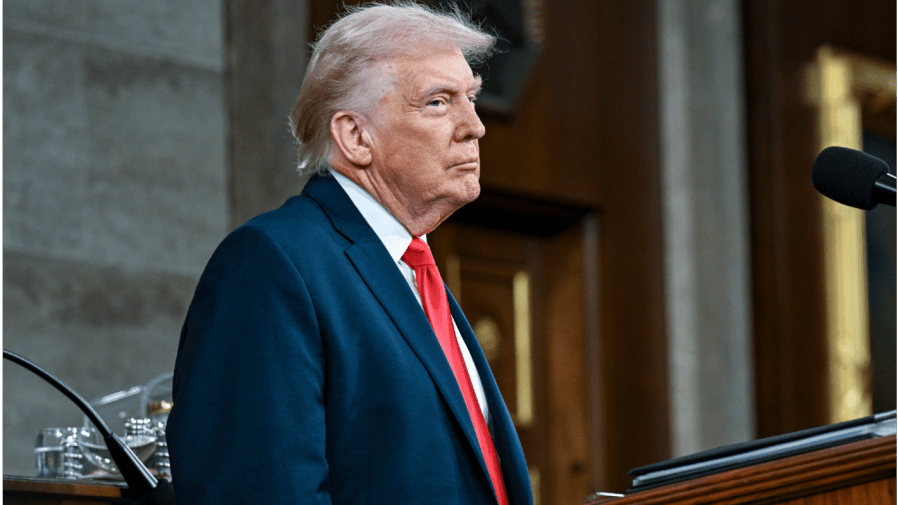
The trade policy implemented by former President Donald Trump has come under increasing scrutiny as the United States grapples with a significant widening of its trade deficit. Since taking office on January 20, 2017, Trump has pursued an approach that views international trade as a zero-sum game, resulting in heightened tensions between the U.S. and its trading partners.
Trump’s administration prioritized tariffs and protectionist measures, arguing that they would benefit American industries. However, critics contend that this approach has led to unintended consequences, including increased costs for consumers and strained relationships with key allies. The U.S. trade deficit reached a record high of $1 trillion in 2022, a significant increase from the $552 billion recorded in 2017, according to data from the U.S. Department of Commerce.
Understanding the Zero-Sum Perspective
The concept of trade as a zero-sum game suggests that one country’s gain is another’s loss. This perspective has driven many of Trump’s trade decisions, including the imposition of tariffs on imports from countries such as China and the European Union. While these tariffs were intended to protect American jobs, they have sparked retaliatory measures, further complicating the trade landscape.
Supporters of Trump’s policies argue that they aimed to level the playing field for American workers. Yet, the increase in tariffs has resulted in higher prices for consumers, leading to inflationary pressures in domestic markets. As a result, the anticipated benefits for American manufacturers have not fully materialized.
Economic analysts are now questioning the long-term viability of this trade strategy. They highlight that while immediate protectionist measures may offer temporary relief to certain sectors, the broader economy suffers from diminished trade relations and increased costs.
Impact on Global Relationships
The ramifications of Trump’s trade policy extend beyond U.S. borders. Countries affected by U.S. tariffs have sought to diversify their trade partnerships, leading to shifts in global economic dynamics. For instance, both China and the European Union have intensified efforts to strengthen trade ties with other nations, potentially undermining the influence of U.S. economic power.
Furthermore, the trade rift has led to a decline in multilateral trade agreements, which historically facilitated smoother international commerce. Analysts point to the failure to advance negotiations on agreements such as the Trans-Pacific Partnership as a missed opportunity for the U.S. to maintain its economic leadership.
As the Biden administration reassesses these policies, questions remain about how to balance trade competitiveness with global cooperation. Policymakers face the challenge of addressing the rising trade deficit while fostering positive relationships with international partners.
In summary, Trump’s trade policy, rooted in a zero-sum mentality, has significantly impacted the U.S. trade deficit and international relations. The consequences of this approach are still unfolding, and the future of American trade policy remains a critical issue for both domestic and global economies.