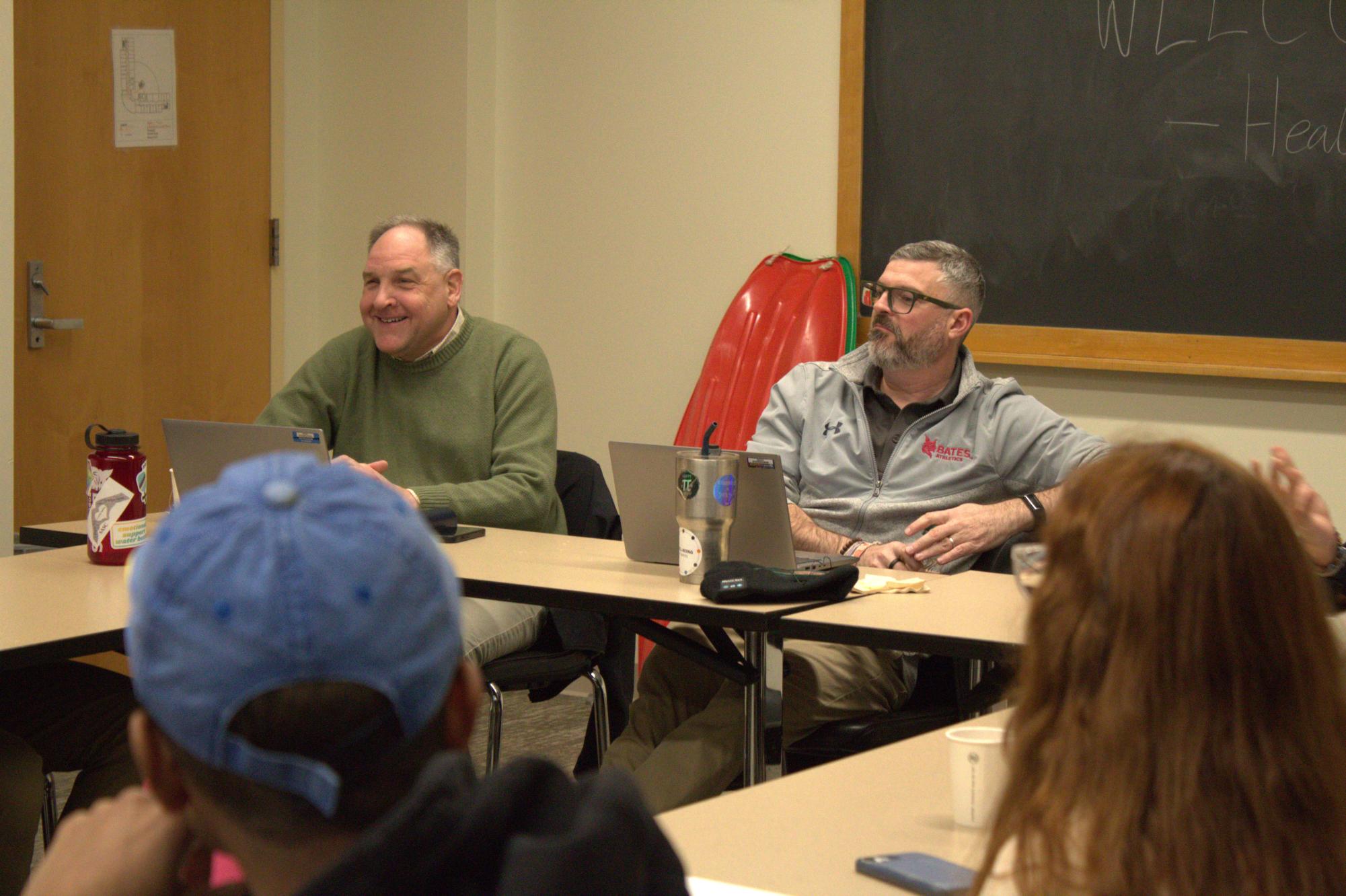
On February 5, 2024, the Gender Equity and Community Outreach club (GENCO) at Bates College held a panel discussion titled “Healthy Masculinities” in Pettengill Hall. The event aimed to unpack the concept of masculinity, exploring what healthy masculinity entails and how it can be integrated into everyday habits, routines, and conversations. Moderated by student Dylan Patel of the class of 2027, the panel featured insights from Professor Michael Rocque, an associate professor of sociology and dean of the faculty, and Raymond Clothier, the interim multifaith chaplain.
Participants engaged with canvases and markers, a regular feature at GENCO’s bi-weekly meetings, allowing for artistic expression and note-taking. Patel guided the discussion with pre-prepared questions that prompted panelists to share their perspectives on various aspects of masculinity, including the concepts of toxic and healthy masculinity as well as the links between healthy masculinity and spirituality.
During the conversation, Rocque offered a refreshing perspective on positive role models. He stated, “When I think of the most masculine man in the world, I don’t think of He-Man, I think of Mr. Rogers.” His assertion highlighted that true masculine strength encompasses qualities such as bravery, sensitivity, and conviction, extending beyond mere physical prowess.
Challenging Constructs of Masculinity
The panelists addressed the challenge of modeling healthy masculinity for younger generations. As they defined masculinity as both a word and a social construct, Clothier emphasized that gender is a socially defined experience. Rocque acknowledged that while it is a construct, gender holds significant social and personal relevance, stating, “…it’s visceral.” Recognizing masculinity as both a construct and a lived experience could foster a deeper understanding of individual relationships with masculinity.
Patel posed a critical question about the keys to fostering healthy masculinity. Clothier responded, noting that the principles of healthy masculinity closely resemble those of maintaining healthy relationships. He underscored the importance of connection with others as a means to build empathy and understanding, essential components in practicing healthy masculinity.
Brandon Ouellette, a staff member from Bates Counseling and Psychological Services (CAPS), echoed Clothier’s sentiments, emphasizing that empathy, understanding, and interpersonal connections are vital for developing healthy masculine practices. He encouraged attendees to seek support through CAPS, highlighting its role as an inclusive space for all students.
Exploring Performative Masculinity
Student Cathy Shi, from the class of 2028, raised the topic of “performative masculinity” and questioned whether it is limiting to criticize men for expressing this form of masculinity. Clothier responded candidly, stating he personally enjoys wearing quarter-zips and drinking matcha. Rocque added that men and those identifying as masculine should be granted the freedom to explore and make mistakes as they navigate their own expressions of masculinity.
As the event drew to a close, GENCO Secretary Jamie Shelton, also an assistant news editor for The Student, encouraged students to participate in future meetings for more casual discussions. She invited participants to engage with gender topics from feminist, queer, and intersectional viewpoints. Further details about upcoming GENCO meetings and events can be found on Bates Engage, fostering an ongoing dialogue around these critical issues.