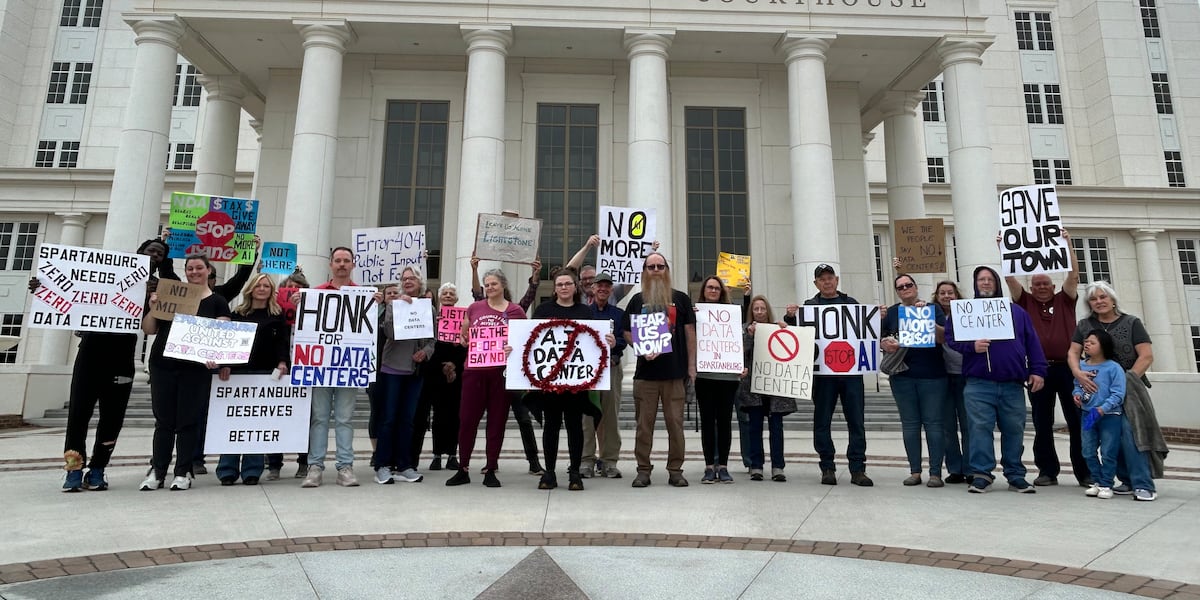
Residents of Spartanburg, South Carolina, gathered on Saturday to voice their concerns over proposed data center developments in the region. More than two dozen protesters expressed worries about the potential impact on local resources, including energy demand, water use, and noise pollution. Many attendees indicated that they were unaware of the full extent of these plans, highlighting a lack of communication from local authorities.
Among the protesters was Eric Allison, a spokesperson for the Facebook group “No Data Centers in Spartanburg.” He articulated a range of concerns, particularly regarding energy consumption and the potential rise in utility rates for residents. “There’s concern about energy usage and how it affects our energy grid. Are we going to have blackouts or brownouts?” Allison asked. He also raised alarms about the impact on water resources, stating, “We fear this could lower our local resources in water.”
Protesters voiced specific health and quality-of-life concerns related to the operation of backup generators, which many believe could exacerbate noise pollution in the area. “We have health concerns over fossil fuel burning of natural gas generators and diesel generators,” Allison stated. He further noted that the constant noise generated by these facilities could disrupt daily life.
The demonstration followed a recent decision by the Spartanburg County Council not to grant tax incentives to the Spero Group, a move that protesters welcomed as a small victory. Despite this, Allison urged the community to remain vigilant about two other pending projects. “As happy as we are about Project Sparrow getting a no vote from County Council… we have two more data centers in Spartanburg,” he said, referencing one project on Pine Street. Northmark Strategies received approval from the county council in 2025 and has begun construction, aiming to become operational this year. Another project is planned for 300 Jones Road, with a timeline tracing back to a proposed cryptocurrency operation in 2022.
Another organizer, Emory Caraviello, who represents “Powergrid Spartanburg,” echoed Allison’s sentiments. She emphasized the need for community awareness and participation in these decisions. “I think these projects were pushed through without much visibility from the community,” she said. Caraviello expressed particular concern over the strain these developments could place on the already burdened electric grid and the uncertainty surrounding the water systems.
Residents like Bradley Broughton argue that the implications of these data centers extend beyond local planning issues. He described the rise of AI-driven projects as fundamentally harmful to communities, questioning whether they would deliver tangible benefits. “At its core, AI is anti-human,” Broughton asserted. He challenged the narrative that data centers would create significant job opportunities, asking, “Where’s the data on that? Where’s the proof?”
Broughton also criticized the allocation of public incentives to industries he believes could eventually replace local jobs. “Why would we give tax breaks to an industry that is literally our replacement?” he questioned, reflecting a growing sentiment among protesters regarding the long-term implications of these developments.
The protest in Spartanburg highlights a broader conversation about the balance between technological advancement and community welfare. As local governments consider the economic potential of data centers, residents are calling for increased transparency and engagement in developmental decisions that could significantly alter their way of life.