New “Roots of Our Labor” Mural Shines Spotlight on MacArthur Park’s Immigrant Communities
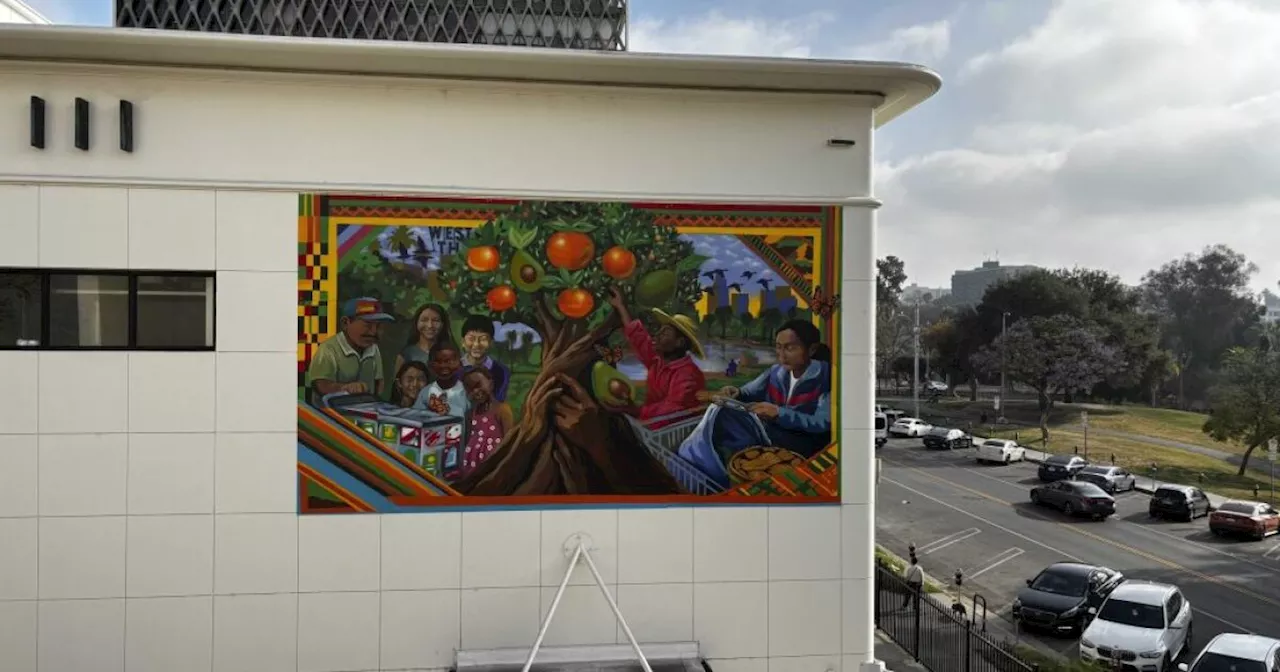
A powerful new mural titled “Roots of Our Labor” was unveiled this week at the UCLA James Lawson Jr. Worker Justice Center in the Westlake neighborhood near MacArthur Park, celebrating the immigrant workers and everyday life that animate this vibrant community. Created through a yearlong collaboration between youth artists and local residents, the mural is a vivid tribute to the resilience and spirit of the people who sustain the area.
Led by artists Luis Mateo and Shakir Manners, the project stemmed from extensive interviews with more than 75 community members around MacArthur Park. The youth artists, including high school graduate Tania Castro, gathered stories that reflect both the challenges—like job losses—and the deep love residents have for their neighborhood.
Visual Storytelling Brings Community Voices to Life
The mural dominates the southeastern wall of the UCLA Worker Justice Center and features a striking tree with a trunk formed from intertwined hands, symbolizing unity and collective strength. The tree bears avocados and oranges, reflecting local agriculture, while a farmer is shown harvesting the fruit. On one side, a tamale vendor sells food, and on the other, an ice cream vendor pushes a cart as children gather around him, capturing everyday moments in MacArthur Park.
Beth Peterson, community arts director at LA Commons, emphasized the mural’s importance: “Immigrants are critical to the community, especially here in MacArthur Park,” she said. “The hands of immigrants have really hung together to form this very beautiful community that we live in today.” The nonprofit LA Commons has dedicated more than two decades to public art projects in MacArthur Park, with this being their 22nd mural.
Addressing Community Challenges Through Art
MacArthur Park often grapples with negative perceptions tied to homelessness and crime. The new mural provides a hopeful narrative by centering the stories of those who live and work in the neighborhood daily. High school artist Leslie Gonzalez highlighted the mural’s message, saying, “Most of the people we talked to told us about their backgrounds and they weren’t that pleasant but they still pushed through and got together for each other.”
The artwork directly confronts struggles faced by immigrant workers and their families while simultaneously celebrating the vibrant culture that keeps MacArthur Park thriving. The mural was painted in March at the Central American Resource Center before installation and was unveiled amidst much community enthusiasm on Thursday, April 23.
Building on Decades of Community Art and Connection
Luis Mateo described the mural as a collective reflection, stating, “Working with youth was essential to the process, allowing the mural to emerge from shared reflection rather than a single perspective.” Shakir Manners added that the work highlights “the unseen hands that sustain communities, emphasizing that true progress is built collectively through persistence, sacrifice and shared purpose.”
This mural also forms part of LA Commons’ ongoing work supported by the statewide initiative Stop the Hate, designed to combat hate incidents and foster cross-cultural understanding, especially in immigrant communities.
Why It Matters for Nevada and US Communities
While rooted in Los Angeles, the mural’s themes resonate broadly across the United States, spotlighting immigrant labor as a cornerstone of many local economies and communities, including Nevada’s urban centers. Public art like “Roots of Our Labor” elevates these vital stories at a time when debates around immigration and labor rights continue nationwide.
Residents and visitors alike are invited to visit the mural and witness this dynamic celebration of community solidarity, resilience, and culture — a timely reminder that shared spaces can unite rather than divide.
“This mural honors both the neighborhood and the people who shape it,” said Luis Mateo. “It’s a testament to community strength seen through the eyes of our youth.”