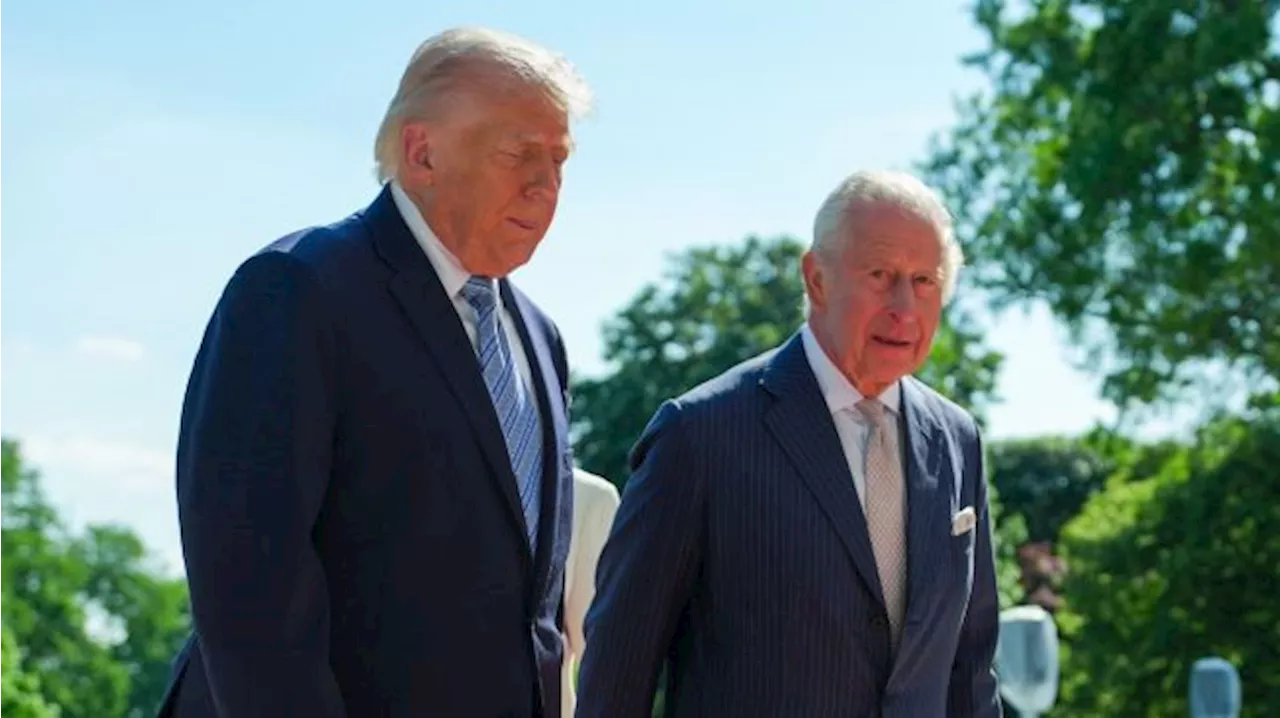
King Charles was reportedly gripped by fear and reluctance to appear in public after a chilling assassination-related comment from President Donald Trump during his recent state visit to Washington, D.C.
Sources close to the British royal disclosed that Charles expressed unease about standing in the open, saying, “I’d rather not stand about here too long. I feel I shouldn’t be here,” following a tense exchange with Trump. The interaction came amid heightened security concerns sparked by gunfire outside the White House Correspondents’ Dinner held at the Washington Hilton. Secret Service agents quickly subdued the suspect after a brief gunfight, ensuring President Trump and other officials were unharmed.
“It was clear Charles was terrified to be out in the open at the start of his visit, and quite rightly so,” said an insider familiar with the security arrangements. Authorities confirmed that the assassination scare amplified existing caution around senior dignitaries.
During the tense conversation, Trump reportedly admitted he felt unprepared for such threats but claimed to be “now prepared.” He then turned the dialogue toward the geopolitical threat posed by Russian President Vladimir Putin, stating, “Right now, I am talking to Putin. He wants war… if he did what he said, he will wipe out the population.”
After the White House meeting, which included tea in the Green Room and a tour of the White House grounds, the visit continued with a garden party hosted at the British ambassador’s residence on Embassy Row.
Heightened Security and Historical Context
Security officials confirmed that public appearances by high-profile visitors like King Charles now demand constant reassessment amid evolving threats. “What might once have been routine optics now carries heightened risks in today’s climate,” a senior source explained.
The unsettling events follow a troubling pattern: Charles has survived several past assassination attempts, including one in 1994 in Sydney where shots fired were later revealed to be blanks, and an intercepted IRA bomb plot in 1983 targeting him and then-Princess Diana.
The recent Washington incident underscores the precarious security landscape for international leaders visiting the United States, with the ongoing threat environment shaping diplomatic protocols and public appearances.
Why This Matters Now
As threats grow more unpredictable, especially in politically volatile environments, the safety of visiting dignitaries like King Charles carries new urgency. The incident at the Washington Hilton drew national attention to the risks faced by global leaders on U.S. soil, intensifying security measures ahead of upcoming events.
For U.S. audiences and Nevadan readers, the episode highlights the ongoing challenges of maintaining security amid increasing domestic and international tensions. Officials warn that evolving threats require vigilance beyond the norm, affecting local communities where foreign dignitaries appear.
What to Watch Next
Authorities continue to investigate the motives behind the gunfire episode at the White House Correspondents’ Dinner venue and are reassessing security for all imminent high-profile events. King Charles’ schedule remains packed, but with added precautions aligned with the recent threat assessments.
This development also deepens attention on the White House’s handling of both security and diplomatic relations during visits by key global figures amid a complex geopolitical landscape.