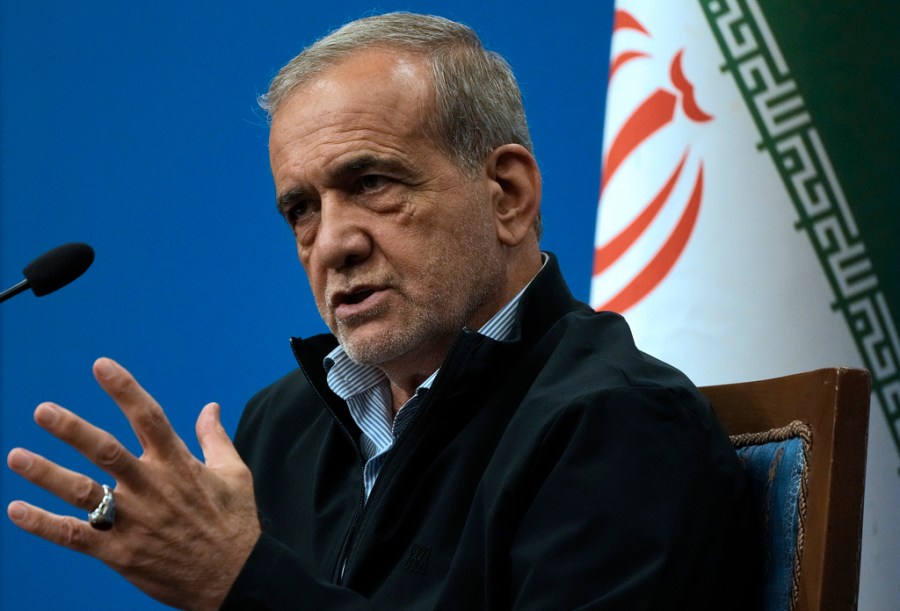
Iranian President Masoud Pezeshkian issued a stark warning on March 10, 2024, against any foreign aggression directed at the nation’s Supreme Leader, Ali Khamenei. This statement comes amid escalating protests in Tehran and other provinces, which have drawn international scrutiny and concern over the state of civil unrest in the country.
In his remarks, President Pezeshkian emphasized that aggression towards Khamenei would be viewed as an act of “all-out war.” He articulated that the challenges faced by the Iranian populace stem from a history of what he described as “longstanding enmity” directed towards Iran. The president’s comments reflect a broader narrative of defending national sovereignty against perceived external threats.
Rising Tensions and Domestic Struggles
The protests across Iran have largely centered on economic difficulties and political discontent. Citizens have expressed frustration over rising living costs, unemployment, and government policies. In light of these issues, the president urged foreign leaders to refrain from actions that could exacerbate the situation. He characterized such aggression as detrimental, not just to the government, but to the Iranian people as well.
Pezeshkian’s statements were made during a press conference held at the presidential office in Tehran, where he reiterated the importance of unity within the country. He called for a collective effort to address the struggles faced by Iranians, asserting that external pressures only add to the hardships experienced by everyday citizens.
The president’s remarks come at a time when Iran is navigating complex geopolitical relationships, particularly with Western nations. The ongoing sanctions and diplomatic tensions have contributed to the economic strain, further fueling public discontent.
International Reactions and Concerns
The international community has been closely monitoring the situation in Iran. Reports of widespread protests have raised alarms regarding human rights and civil liberties in the country. Various human rights organizations have called for accountability and have urged the Iranian government to respect the rights of its citizens to peacefully assemble and express their grievances.
In response to the escalating situation, leaders from several countries have expressed their concerns publicly. They have emphasized the necessity for dialogue and peaceful resolution of conflicts. The Iranian government, however, remains firm in its stance against perceived foreign interference, viewing it as a challenge to its sovereignty.
In light of these events, President Pezeshkian’s address is likely to resonate within both domestic and international spheres. His commitment to defending Khamenei and the nation’s leadership may further complicate diplomatic efforts aimed at addressing the underlying issues fueling unrest in Iran.
As the situation evolves, it remains crucial for all parties involved to engage in constructive dialogue and seek pathways toward peace and stability in the region.