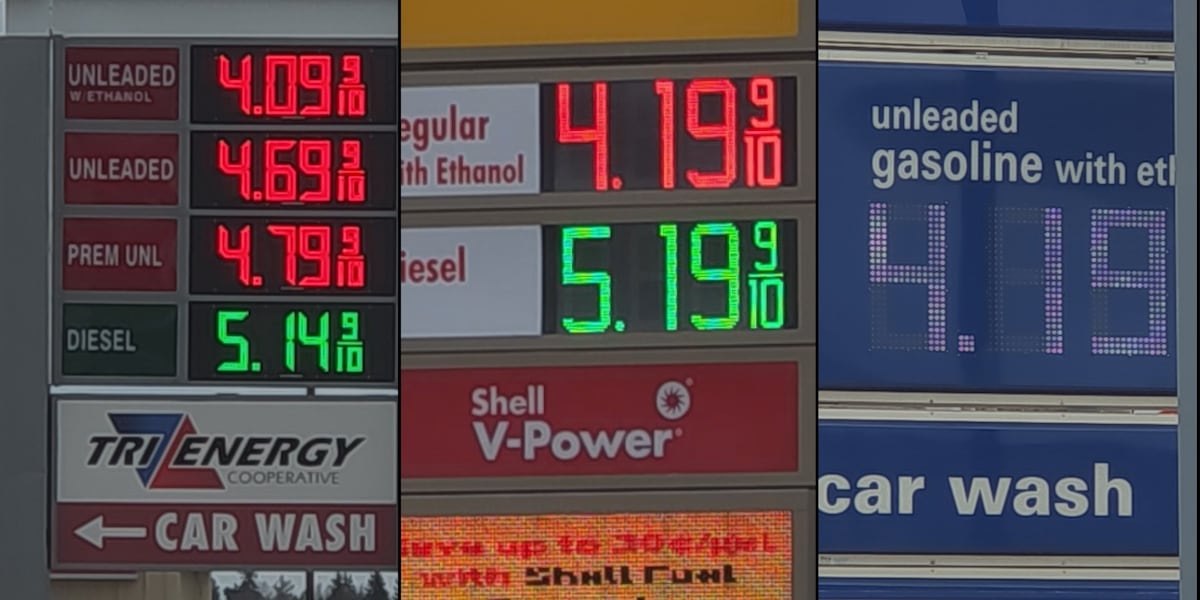
North Dakota Gas Prices Spike More Than 30 Cents This Week Amid Tensions With Iran
North Dakota drivers are facing a sudden and steep rise in gas prices as the ongoing U.S. conflict with Iran continues to disrupt global energy markets. The statewide average price of gasoline has climbed to $4.08 a gallon, marking an increase of more than 30 cents just in the past week, according to the American Automobile Association (AAA).
This surge adds to a year-over-year increase of more than one dollar per gallon, making fuel costs a heavier burden for residents and businesses alike. Nationally, gas prices have jumped by 49% since late February when military strikes began, pushing the average price to $4.48 a gallon, the highest level since July 2022.
Strait of Hormuz Closure Deepens Supply Struggles
The prolonged closure of the Strait of Hormuz, a critical shipping lane for oil exports, remains at the heart of the pressure on fuel costs. This direct choke point, held in dispute as U.S. and Iranian forces clash, has tightened global crude supplies and inflated energy prices worldwide, including in North Dakota.
Representative Julie Fedorchak of North Dakota acknowledges the challenges faced by consumers but emphasizes the state’s capacity to help stabilize prices. “It’s tough right now, but what we’re seeing in North Dakota, we can increase production in Bakken,” she said. “That’s all helpful and will help continue to stabilize the prices. And once we wrap up this conflict in Iran, I think that our American economy is going to soar and prices are going to go down.”
North Dakota’s Oil Production Seen as Key to Price Stability
North Dakota, home to the prolific Bakken formation, is positioned as a vital player in cushioning energy shocks. While the state’s gas prices remain approximately 40 cents lower than the national average, the rapid jump this week signals increased volatility and uncertainty for drivers in the region.
The continued geopolitical conflict leaves the timeline for a resolution—and relief at the pump—uncertain. Energy market watchers are closely monitoring developments in the Middle East as ongoing disruptions ripple through the U.S. fuel supply chain.
For Nevada and other states, these national trends underline the persistent pressure on consumer wallets at a time when many households are still recovering from inflationary impacts on daily essentials.
What’s Next for Gas Prices?
Experts warn prices could remain elevated or even spike further if tensions persist or escalate. Meanwhile, lawmakers like Fedorchak advocate for boosting domestic oil production as a key strategy to offset foreign supply risks. The coming weeks will be decisive for the energy sector and consumers nationwide.
As the U.S. and Iran continue to seek diplomatic solutions, motorists across North Dakota and the country brace for continued uncertainty at the pump.