Massive Sewage Spill Forces Closure of Providence River Shellfish Harvest Area
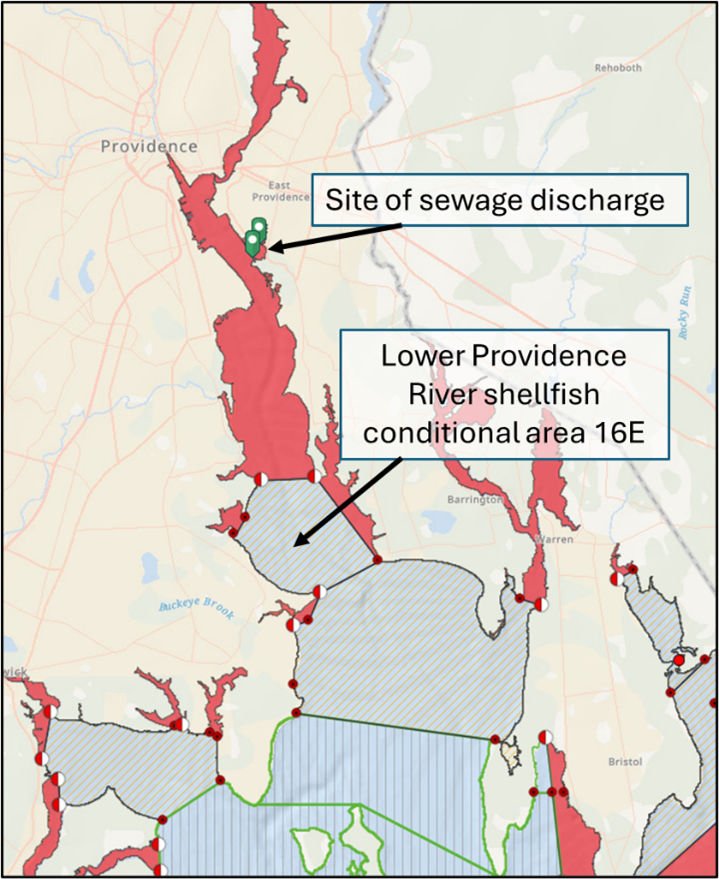
A critical wastewater main break has dumped approximately 800,000 gallons of untreated sewage into the Providence River, prompting an immediate closure of the shellfish harvest area near Watchemoket Cove in East Providence.
The release was confirmed by the Rhode Island Department of Environmental Management (DEM) on Tuesday afternoon after a rupture in a 20-inch forced main pipe near the popular East Bay Bike Path. The cause of the break remains unknown, but repair crews are actively working to isolate and fix the damaged section.
Immediate Public Safety and Environmental Impact
The spill has led DEM to close the Lower Providence River conditional shellfish area, designated Area 16E, until further notice. This prevents any shellfish harvesting due to unsafe conditions that arise from exposure to untreated sewage.
Water and shellfish quality testing will be conducted by DEM and the Rhode Island Department of Health (RIDOH). The area will only reopen when test results meet FDA standards for safe shellfish consumption, protecting public health and maintaining Rhode Island’s reputation for high-quality seafood.
Ongoing Response and Repair Timeline
Mayor Bob DaSilva provided an update late Tuesday via his Facebook page detailing the response timeline. The leak was first detected at 11:00 a.m. on Monday, May 4, with crews initiating a bypass switch that completed by 8:00 a.m. on Tuesday, May 5. By that time, the broken section had been fully isolated to stop further discharge.
DaSilva emphasized that no additional leaks beyond the initial 800,000 gallons spill have been reported, noting the wastewater in the isolated pipe section is currently being pumped out. All sewage flows in the collection system have been rerouted directly to the East Providence Water Pollution Control Facility.
Community and Environmental Precautions
Access to the East Bay Bike Path near Watchemoket Cove may be restricted temporarily as repair work continues, affecting local recreation. Residents and visitors are urged to avoid the closed shellfish harvest zone and stay updated via DEM’s official channels.
The multi-agency collaboration involving DEM, RIDOH, and the RI Coastal Resources Management Council (CRMC) reflects a swift mobilization to monitor water quality, minimize environmental damage, and ensure public safety.
For current updates on water quality and shellfish harvesting restrictions, the public is encouraged to call DEM’s 24-hour shellfishing hotline at 401-222-2900 or visit www.dem.ri.gov/shellfish. Subscribing to DEM’s Shellfish Closure email list and following their social media accounts (@RhodeIslandDEM on Twitter and Instagram) will also provide timely information.
Wider Implications and What to Watch For
The spill highlights the vulnerability of wastewater infrastructure in vital coastal areas and raises concerns about waterway contamination affecting fisheries and recreation. Similar incidents nationwide prompt questions about the state of aging infrastructure and potential risks to public health.
Officials promise continuous updates as repair efforts progress and results from environmental testing become available. Residents in Rhode Island and surrounding states should stay alert for changing conditions that could impact seafood safety and outdoor activities around waterways.
The Nevada Voice will monitor this story closely, providing the latest verified updates on this environmental hazard and public health response across the US.