The United States has sharply curtailed the amount of sensitive nuclear intelligence it shares with South Korea following a high-profile disclosure of a North Korean uranium enrichment site by a South Korean lawmaker, sources confirmed this week. This move exposes tension within one of Asia’s closest military alliances as officials scramble to contain fallout from the breach.
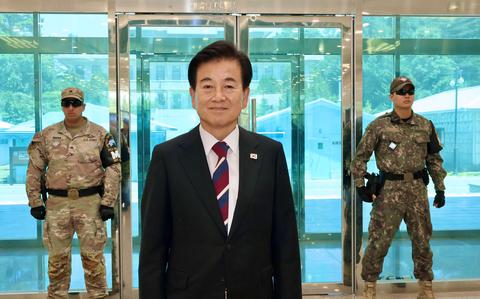
On March 6, South Korea’s Unification Minister Chung Dongyoung publicly identified North Korea’s Kusong region as the location of a uranium enrichment facility during a National Assembly committee meeting, citing information that the U.S. and South Korea classify as a joint secret. The comment was amplified by video footage posted on YouTube.
Days later, on April 21, South Korea’s Defense Intelligence Agency explicitly labeled the details of the site classified under a “joint secret” agreement with the United States, intensifying concerns about the leak’s impact. Representative Lim Jong-deuk, a key figure in the National Defense Committee, confirmed to reporters the information’s sensitive status.
Following the disclosure, Yonhap News reported that the U.S. had responded by cutting back South Korea’s access to vital intelligence on North Korea’s nuclear facilities. The restriction marks a rare diplomatic strain between the two allies, especially significant given the ongoing threat posed by Pyongyang’s nuclear ambitions.
Despite the restrictions, unnamed South Korean military officials said intelligence coordination remained intact during North Korea’s missile launches in March and April, underscoring that joint defense operations continue smoothly in real-time. However, officials declined to specify how extensive the U.S. intelligence cutbacks are.
Chung Dongyoung has denied leaking classified information, stating his comments were based solely on publicly available sources. “The situation is being framed incorrectly as a leak,” Chung said during a news briefing last week.
The South Korean Ministry of National Defense adopted a cautious stance, neither confirming nor denying the intelligence sharing limits during a recent briefing. Spokeswoman Chung Binna emphasized that Seoul and Washington “communicate closely and frequently on major issues,” and confirmed the alliance’s real-time military information sharing “is functioning properly.” She warned that revealing specifics on the intelligence sharing status would jeopardize national security and the South Korea-U.S. alliance.
U.S. Forces Korea (USFK) declined to comment on the intelligence dispute. Spokeswoman Choi Min-jung told Stars and Stripes that the issue is sensitive and ongoing discussions are underway.
South Korea’s national security advisor Wi Sung-lac, traveling with President Lee Jae Myung in Hanoi, confirmed active communications with the U.S. to resolve the dispute. Wi would neither confirm nor deny the intelligence sharing cut, citing the sensitive nature of the matter but stressed both countries are working hard toward a solution.
The controversy escalated when Rep. Sung Il-jong, chair of South Korea’s National Defense Committee, claimed that USFK commander Gen. Xavier Brunson personally met with South Korean Defense Minister Ahn Gyu-back to voice concerns about Chung’s remarks. However, a defense ministry spokesperson dismissed this meeting as “not true at all.”
President Lee also publicly defended Chung on April 20, asserting on X social media that the information about the North Korean site had been publicly available prior to the comments, seeking to ease tensions within the alliance.
Why This Matters Now
This incident underscores the fragility of intelligence-sharing relations even among close allies facing a common threat. With North Korea advancing its nuclear weapons program and increasing missile tests, seamless U.S.-South Korea coordination is critical for U.S. national security and stability in the Asia-Pacific region.
The intelligence sharing cut does not appear to have immediately compromised monitoring efforts, but the political repercussions could stall even deeper cooperation at a time when the Biden administration and Seoul seek stronger regional deterrence.
What to Watch Next
Both Washington and Seoul are reportedly negotiating behind closed doors to mend the rift. Continued public denials alongside private efforts suggest a delicate balancing act to preserve trust without escalating diplomatic fallout.
Observers will be watching for further official statements and any changes in military intelligence protocols that could affect U.S. and South Korean readiness against North Korean provocations.
For U.S. readers, particularly in Nevada where national defense and international security remain top priorities, this development signals evolving challenges in global alliances that impact American safety and geopolitical strategy.
The Nevada Voice will follow this story closely and provide updates as the situation develops.