Freemasons, the centuries-old fraternal organization long shrouded in secrecy, are breaking their silence with eye-opening revelations about their impact on mental health, personal growth, and charity work.
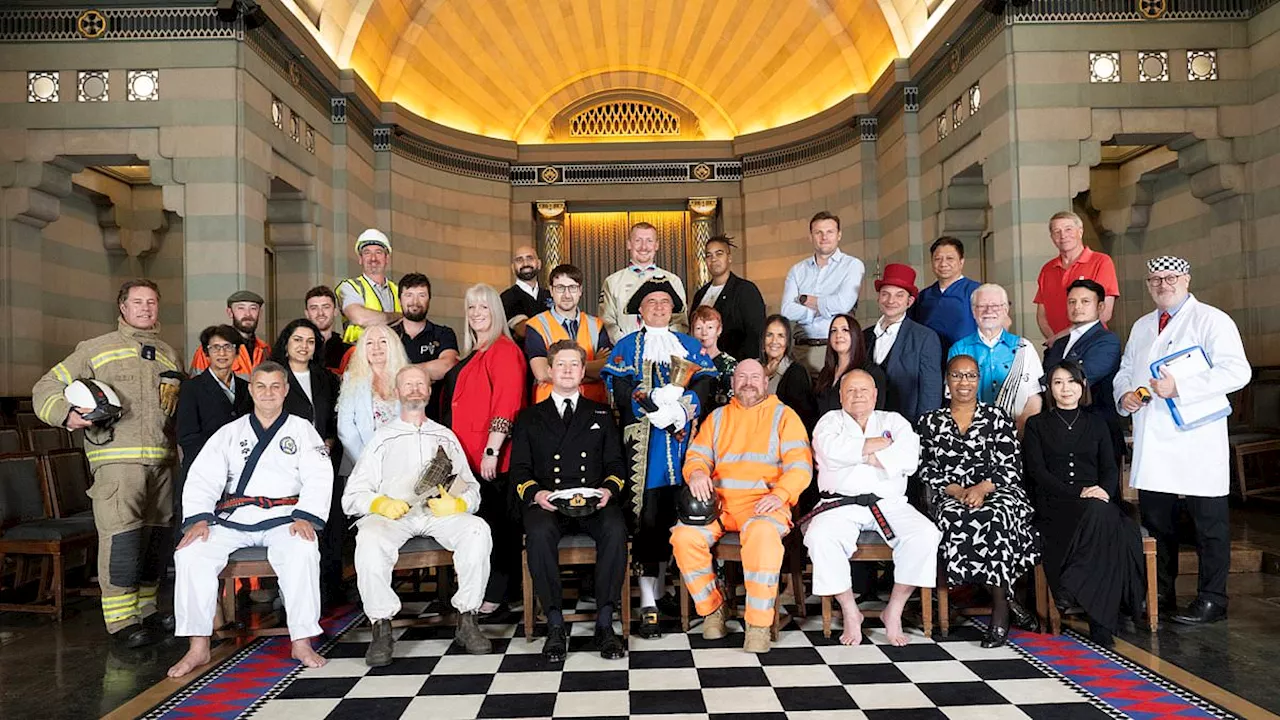
In a rare and compelling glimpse inside the Grand Temple of the United Grand Lodge of England, 30 men and women from diverse backgrounds shared how Freemasonry changed their lives, offering much more than the conspiracy-fueled mystique typically associated with the group. Members include first responders, train drivers, firefighters, chefs, and even magicians—all united by the shared belief in brotherhood, charity, and moral improvement.
Freemasonry’s True Mission: Support, Charity, and Community
Many members emphasized the organization’s focus on improving mental health. For example, Matthew Wintle, a 52-year-old first response officer, described joining as a source of peace amid the chaos of his job, likening meetings to a spiritual refuge. “A lot of us are mental health first aiders,” Wintle said, highlighting the deep support network that Freemasonry provides.
Others credit Freemasonry with helping combat loneliness, depression, and even dementia. Vincent Geluz-Bustos, a Filipino chef who developed post-operative dementia, reported dramatic memory improvement after joining, describing Freemasonry as a vital source of friendships and life skills.
Ben Evans, a 33-year-old train driver from Penzance and one of the few openly gay Freemasons, stressed the group’s openness: “Masons are the most open-minded group of people I’ve ever met.” His story reflects the group’s evolving identity—breaking stereotypes and emphasizing inclusivity and acceptance.
Diverse Voices, One Brotherhood
The members are of all ages, ethnicities, sexual orientations, and professions. They come from cities across the UK, uniting in a network that transcends social boundaries. Women are also rising within the ranks, with figures like Mia Cameron-Dungey, a Navy team leader and former worshipful master, sharing how female membership has grown steadily and become an integral part of this community.
“For years, women were a hidden secret,” Cameron-Dungey said. “Now our numbers are up, and it’s made me grow in confidence.”
Like many, Josh Lee-Taylor, a Nottingham scout leader, highlighted the organization’s deep commitment to youth and charity, noting that many lodges support local youth groups and volunteer time and resources to make a tangible difference in communities.
Dispelling Myths and Embracing Transparency
Freemasonry has battled decades of conspiracy theories involving secretive handshakes, hidden rituals, and dark allegations. But insiders like Mark Freeman, a mechanical engineer, and Mark Dutton, a postman, denied any sinister activity, emphasizing the organization’s dedication to honesty, charity, and fellowship.
“There’s nothing secretive and grey about us—we’re from every walk of life,” said David Boylin, an 81-year-old musician active in lodges. “We do so much to help others that people ought to know about it.”
The members remain discreet about their rituals but are eager to showcase their real-world impact, including fundraising efforts, mental health support, and the stronger community they have built—calling out the importance of “making good men better” through ethical living and sincere friendships.
Why This Matters to Nevada and US Readers
While the stories come from UK lodges, the core values of Freemasonry—charity, inclusion, and self-improvement—resonate with American audiences, especially amid rising mental health concerns and calls for stronger social networks. Nevada has a rich history of Masonic involvement, and these revelations from Europe align with recent growth and transparency efforts within US lodges.
With nearly 1.1 million Freemasons in the United States, including thousands across Nevada, this movement’s modern face challenges outdated stereotypes and reveals a dynamic community addressing crucial social challenges today.
What’s Next for Freemasonry?
The organization is actively encouraging openness and youth participation through new student lodges and community partnerships. The testimonies of these 30 members signal an important turning point—shifting from shadows into the spotlight with stories of personal triumph, social contribution, and a renewed promise of brotherhood and support.
As Nevada and US readers consider belonging or learning about this historic fraternity, these new insights offer a timely window into the actual lives and values of Freemasons today—far removed from myths, grounded instead in humanity and generosity.